
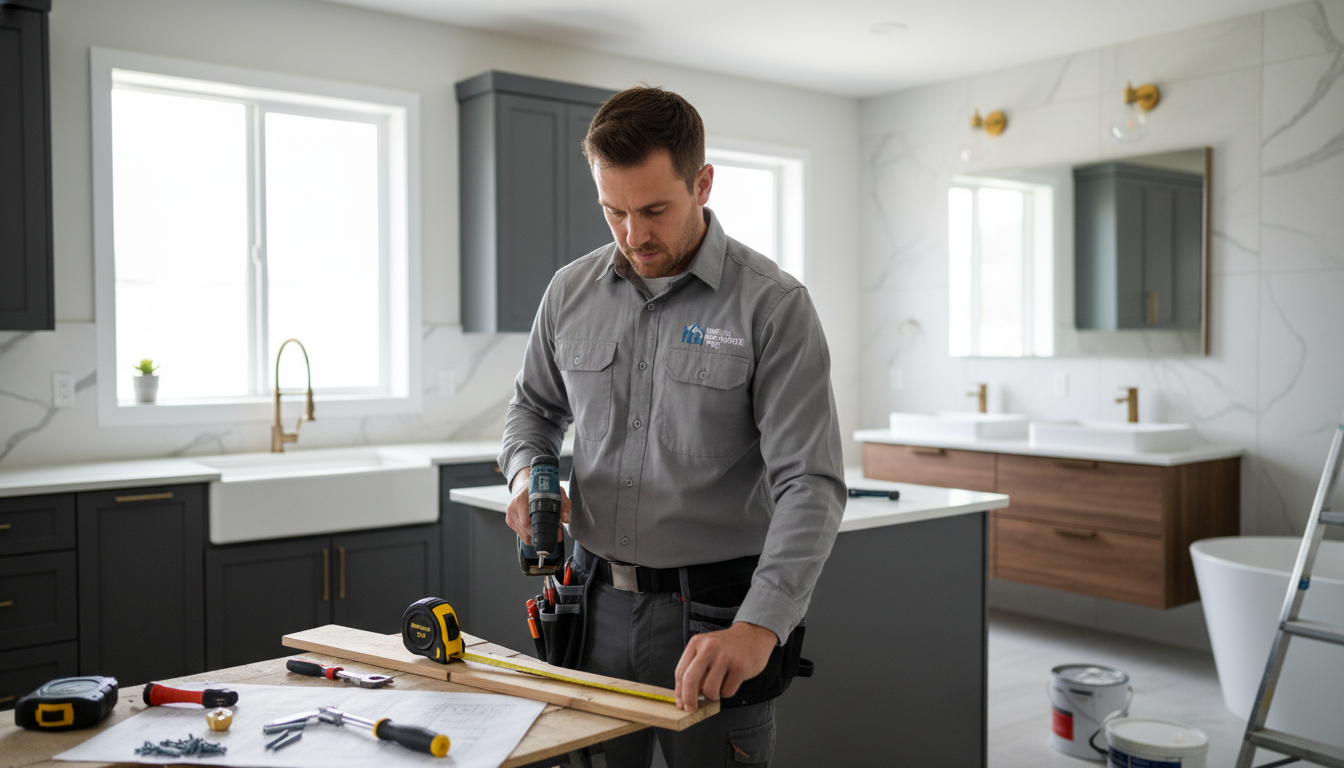
Could hiring a handyman save you money on a kitchen renovation — or put your home at risk?
This article answers a question many South African homeowners face. Is a handyman the right choice for kitchen or bathroom work? Or should you hire a licensed contractor or tradesperson? We explore what a handyman does and where their skills end. This helps you decide between short-term savings and long-term safety and value.
Handymen are great for small jobs like fixing a leaky tap or minor carpentry. But bigger tasks like bathroom renovations and full kitchen remodels need more. These jobs require plumbers, electricians, and tilers, along with permits and following local building codes. A general contractor or licensed remodeler handles these tasks.
For South African homeowners, safety, code compliance, long-term property value, and liability protection are key. The initial cost of hiring a handyman might seem appealing. But, it could pose risks if the job is too big or if permits are needed.
Read on to find out what tasks a handyman can handle and which should go to licensed pros. We’ll also compare handyman vs general contractor and give practical steps for home remodels or bathroom renovations.
Key Takeaways
- Handymen suit small-scale repairs and short-duration tasks in kitchens and bathrooms.
- Larger kitchen renovation and bathroom renovations often need licensed trades, permits and coordinated project management.
- Hiring a contractor generally offers better insurance cover and accountability for complex remodels.
- Short-term savings with a handyman can lead to higher costs later if work is outside their scope.
- South African homeowners should balance cost, safety and long-term property value when choosing who to hire.
Understanding who a handyman is and what they typically do

A handyman is a handy worker who fixes small home repairs and does routine maintenance. They know basic carpentry, painting, and simple plumbing and electrical work. This includes fixing a leaky faucet or changing a light fixture.
Definition and typical skill set
Handymen usually have practical skills but not formal qualifications. They can handle minor repairs, adjust doors and windows, and assemble flat-pack furniture. They often charge by the hour for quick jobs.
Common types of jobs handymen typically handle
- Minor plumbing work such as replacing washers and fixing small leaks.
- Basic electrical tasks like swapping a light fixture or replacing sockets where permitted.
- Painting, small carpentry, fence repairs and roof shingle patching.
- Flat-pack furniture assembly and other small home repairs around the property.
Homeowners pick a handyman for quick, affordable fixes. For simple jobs that can be done in a day, they offer convenience and a wide range of services. This is without the cost of a bigger company.
Licensing, insurance and legal limits in South Africa
In South Africa, regulated trades like plumbing and electrical work need licensed professionals and permits. A handyman might not be allowed to do work that needs certified skills or permits.
Licensed contractors have business licences, follow building codes, and often have liability insurance. Unlicensed workers might be cheaper but could lack insurance and skip permits. This can put homeowners at risk of safety issues and legal problems.
Before hiring for anything more than routine maintenance, check local rules. Also, ask if permits or certified tradespeople are needed for the job.
handyman qualified for kitchen or bathroom renovations

Small renovation jobs are perfect for a local handyman. In South Africa, homeowners can upgrade their kitchens or bathrooms in stages. A handyman can do minor repairs and maintenance, keeping costs down.
When a handyman may be suitable for kitchen or bathroom work
Handymen are great for non-structural, low-risk tasks. They can replace tap washers, change faucets, refit cabinet doors, paint, and more. They can also install new fixtures like light fittings or shelving.
They make repairs faster and help with phased renovations. This approach saves money compared to hiring a general contractor. Homeowners often call handymen for quick fixes that don’t need permits or inspections.
Tasks that typically require a licensed contractor or tradesperson
Certain tasks need a qualified tradesperson. This includes structural changes, major plumbing work, and full bathroom remodels. Electrical work, HVAC, and gas jobs also require a licensed contractor.
Projects needing permits and code compliance are best managed by a general contractor. This ensures safety and protects the home’s value.
Risks of using a handyman beyond their scope
Improper electrical or plumbing work can cause fires, water damage, and mould. Unpermitted work can lead to denied insurance claims and costly fixes if inspectors demand removal.
Poor workmanship can lower your home’s value and make resale harder. Unlicensed providers may not offer warranties. Homeowners could face legal and financial issues if repairs fail or the job is abandoned.
Comparing handyman vs general contractor for kitchen and bathroom renovations
Deciding between a handyman and a contractor depends on the job’s size and complexity. For small repairs or single tasks, a handyman is quick and affordable. But for big projects needing coordination, a general contractor is better for their project management skills.
Scope of work and project management differences
Handymen do minor tasks like adjusting cabinets, patching, and small tiling. Their work is short-term and focused on one trade.
General contractors manage full renovations and work with subcontractors like plumbers and electricians. They plan the work, order materials, and keep the project running smoothly.
Licensing, insurance coverage and accountability
Licensed remodelers have a contractor’s license and insurance. This protects homeowners from accidents or disputes about work quality.
Handymen might not have insurance or work without it. This leaves homeowners at risk for permits and code compliance. A licensed contractor handles these tasks.
Cost structure and long-term value
Handymen charge by the hour, ideal for quick fixes or staged upgrades. Their lower costs are attractive for short jobs.
General contractors offer a fixed quote for labour, materials, and more. Their upfront cost might be higher, but they ensure quality and protect property value over time.
When choosing between a contractor and a handyman, think about long-term value. For big projects, a general contractor saves money by ensuring quality and compliance. For small tasks, a handyman is fast and affordable without the need for full project management.
How to decide who to hire and practical steps before starting a renovation
Choosing the right team is key. Match the job to the skill set. Knowing the scope helps find the right tradesperson, whether it’s small repairs or a big renovation.
Start planning early. This sets realistic timelines and cost estimates. It helps you make a smart choice.
Assess your project: types of projects and required expertise
Make a list of tasks. Note if they involve water, gas, electricity, or structure. For small tasks like painting or fixing fixtures, an experienced handyman is enough.
For big changes, like plumbing or electrical work, you need licensed experts. For big projects, like a new kitchen, consider a contractor and a handyman.
Verifying credentials, insurance and references
Ask for licence numbers and check them with South African authorities. Make sure they have insurance and worker compensation.
Check references and look at their recent work. A good contractor will give you a detailed estimate and a contract. They should also explain who gets permits and how they manage subcontractors.
Planning, timelines and cost estimates
Get detailed quotes that include all costs. Handymen charge by the hour for small jobs. For big projects, remodelers or contractors give a full estimate.
Plan a realistic timeline. Stage the work to cause less disruption. Include a budget for unexpected costs and agree on extra charges in writing.
Follow these steps to check credentials and compare quotes. This way, you can decide if a contractor or handyman is best for your project.
Conclusion
Choosing between a handyman and a contractor for kitchen or bathroom work depends on the job’s size and risk. For small tasks like fixing minor issues or painting, a handyman is often cheaper. They are good for simple home repairs.
But, for big jobs that involve plumbing or electrical systems, you need a licensed pro. A contractor offers better project management and safety. This is key for keeping your home’s value up.
Homeowners in South Africa should check the handyman’s or contractor’s credentials. Get several quotes and choose wisely based on the job’s complexity. This ensures you get the best value for your money.
Remember, safety and value should be your top priorities. Whether you pick a handyman for small tasks or a contractor for a big project, make sure it’s right for your home. This way, you’ll have peace of mind and quality work.
FAQ
Is a handyman qualified for kitchen or bathroom renovations?
A handyman is good for small tasks like fixing taps and painting. But for big changes, like plumbing or electrical work, you need a licensed expert. This ensures the job is done right and meets building codes.
What is a handyman and what skills do they typically have?
A handyman does many small jobs around the house. They can fix doors, paint, and do basic plumbing. They’re skilled but not experts in all trades.
What kinds of jobs do handymen typically handle?
Handymen do tasks like fixing taps and changing light bulbs. They also paint and fix drywall. These jobs are quick and usually done in a day.
What are the licensing, insurance and legal limits for handymen in South Africa?
In South Africa, handymen need licenses for some jobs. But for big tasks, you need a licensed pro. Always check if they have insurance and ask for their license number.
When is a handyman suitable for kitchen or bathroom work?
Handymen are great for small jobs like fixing taps and painting. They’re perfect for quick fixes that don’t need permits.
Which tasks should definitely be handled by a licensed contractor or tradesperson?
Big jobs like changing plumbing or electrical systems need a pro. Also, any work that needs permits or affects the structure should be done by a licensed expert.
What are the risks of using a handyman beyond their scope?
Using a handyman for too much can be risky. It might cause fires, water damage, or mould. You could also face legal issues and have no warranty.
How do handymen differ from general contractors in scope and project management?
Handymen do small tasks and don’t manage big projects. Contractors handle big jobs, get permits, and manage the project from start to finish.
What are the differences in licensing, insurance coverage and accountability?
Contractors have licenses and insurance. They’re accountable and provide warranties. Handymen might not have these and could be uninsured.
How do costs compare and what about long-term value?
Handymen are cheaper for small jobs but might not be the best value. Contractors cost more upfront but ensure quality and safety, saving money in the long run.
How should I assess my project and decide who to hire?
Decide if the job is simple or needs permits. Choose a handyman for small tasks and a contractor for big ones. Think about the timeline and how it affects your home.
How do I verify credentials, insurance and references?
Check licenses and insurance with the authorities. Ask for references and look at past work. Good contractors provide clear estimates and welcome questions.
What should be included in planning, timelines and cost estimates?
Get detailed estimates that include all costs. Agree on a timeline and who will get permits. Plan for unexpected issues and understand how extra work is charged.
What practical steps should South African homeowners take before starting a renovation?
Check if the job needs a license. Get quotes, verify credentials, and ask about warranties. Make sure you understand permits and timelines. Prioritise safety and value.
Can hiring a handyman save money?
Yes, for small jobs, a handyman is cheaper and quicker. But for big or complex jobs, a contractor is safer and more cost-effective in the long run.


