
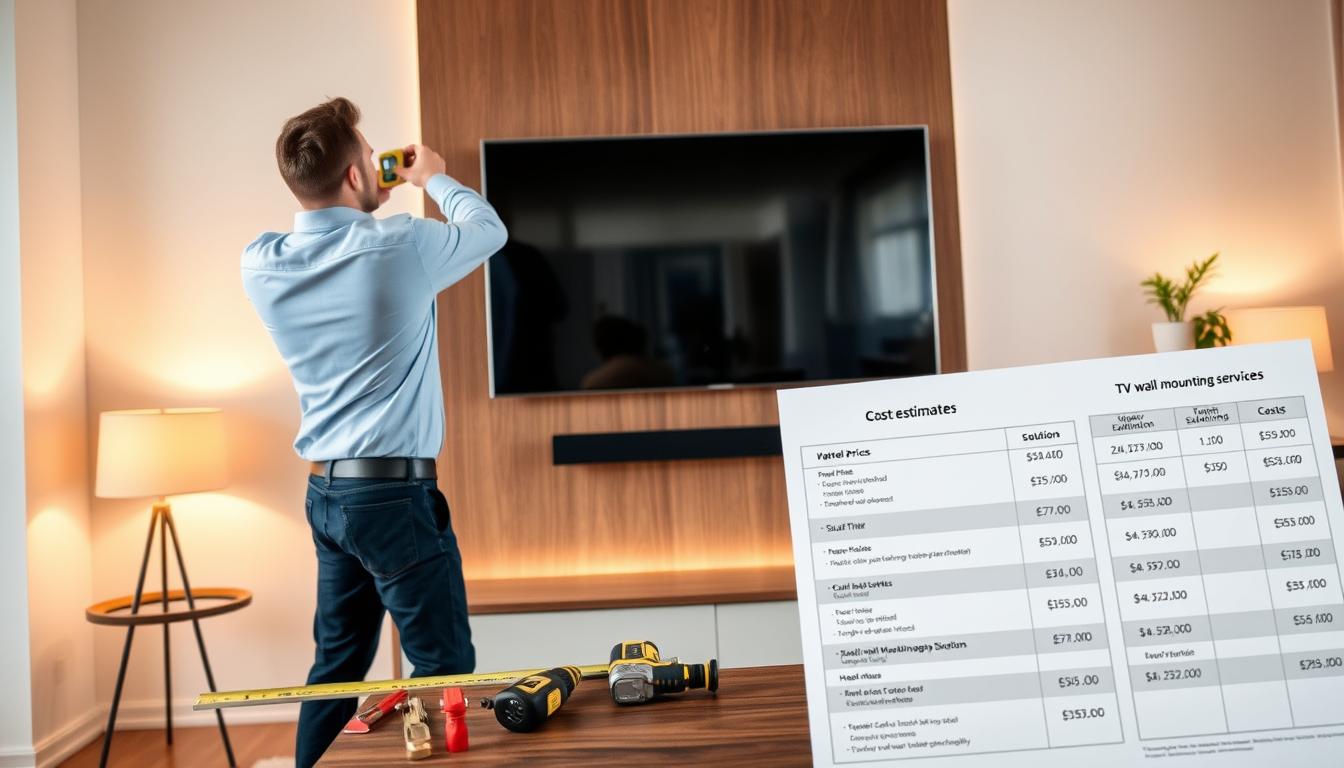
Wondering how much it costs to hang a TV on the wall in South Africa? It all starts with a simple question. Basic installs usually cost between $100–$300 (≈ R1 800–R5 400). But, if you need something more complex, prices can go up to $1 000+ (≈ R18 000+).
Homewyse gives an example from January 2026. They say the cost for basic wall mount installation can start at around $281–$437. This is for both the parts and the labour, under the right conditions.
The final cost to mount your TV depends on a few things. These include labour rates in your area, import duties on the brackets and mounts, and how much demand there is for TV installation services. This guide will help you understand how these costs work in South Africa. It will also show you what to expect for different scenarios.

In this article, you’ll learn about different types of mounts. You’ll see how the type of wall and the complexity of the installation affect the price. We’ll also talk about whether to hire a handyman, an electrician, or a professional installer.
You’ll discover the cost of extra services like cable management and outlet installation. We’ll also compare the cost of hiring someone to do it versus doing it yourself.
Key Takeaways
- Typical published national averages sit near $100–$300 (≈ R1 800–R5 400) for standard installs.
- Specialised or complex installs can exceed $1 000 (≈ R18 000+) depending on scope.
- South African tv installation cost varies with local labour rates, import costs and metro demand.
- Mount type, wall material and additional services (cable hiding, outlets) strongly affect final price.
- This guide translates Homewyse, Fixr and Taskrabbit estimates into practical South African pricing context.
Understanding the cost to hang a tv on the wall

Before you book a tradesperson, it’s good to know what affects tv wall mount costs. This section explains the main parts of a quote. It also talks about typical prices in different countries and how these translate to South Africa.
What price covers
A quote usually includes labour, hardware, and supplies. Labour means getting ready, marking, and drilling. Hardware is the bracket and any extra fittings. Supplies are things like fasteners and wall plates.
Setup, testing, and cleaning are also part of the service. Homewyse breaks down these parts so you can see what affects the price.
Typical national and regional ranges
US sources give a good starting point. Fixr says installs cost between US$100 and US$300. Taskrabbit mentions hourly rates around US$46, with New York being more expensive.
Small jobs are often under US$180, while bigger ones can cost more than US$250–$400. Homewyse gives examples for good conditions, around US$281–$437.
How published estimates translate to South Africa
Use international numbers as a starting point. Then adjust for local labour, VAT, and import costs. South Africa’s labour is generally cheaper than the US, but import costs can add up.
Cities like Johannesburg and Cape Town might have a bit higher prices due to demand and travel. Expect quotes in rands that reflect local costs and any taxes on imports.
When comparing quotes, ask for a detailed breakdown. This way, you can see the cost of labour, hardware, and supplies. It helps you spot where you can save without compromising on quality or safety.
Average installation prices and local context for South Africa

Before you book a TV mounting job in South Africa, it’s key to know the average prices. The cost depends on labour rates, the type of mount, and the wall’s condition. Import taxes and local demand can also affect prices, making them higher than just currency conversions suggest.
Common price bands you might expect in South Africa
For simple installs on drywall with timber studs, expect to pay from R150 to R500 for labour only. If you want a basic bracket included, prices usually fall between R400 and R1 200.
Mid-range jobs, like tilt mounts or basic cable concealment for screens 40–55″, cost between R800 and R2 500. These include more careful positioning and some wiring work.
Premium and complex jobs, like full-motion mounts or in-wall cable routing, can cost R2 500 to R8 000 or more. These involve more detailed work and larger TVs.
Comparing international averages to South African typicals
International sites often list US$100–$300 for many installs. Homewyse gives US$281–$437 for unit-cost work. But, south africa typically costs are different due to lower labour rates, import duties, and VAT.
Branded mounts, specialist electricians, and delivery fees can also add to the cost. This makes it wise to compare quotes, not just rely on exchange rates.
Why location matters: Johannesburg and other metros
In major metros like Johannesburg, there’s more competition and quicker service. This can mean a small premium for convenience and speed. Yet, more choice usually means better value.
Rural or outlying areas might have higher costs due to travel fees or limited installer availability. Costs can vary in south africa based on distance, specialist access, and demand peaks.
When looking for TV mounting in south africa, compare several quotes. Check what each includes. This helps you find the best balance between price, service, warranty, and peace of mind.
How tv size and weight affect mounting prices
Choosing a screen size changes the job. Smaller TVs are easier to lift and mount. But, larger TVs need stronger brackets and more care, often requiring extra hands. This makes the cost depend on the TV size as much as the mount type.
Price ranges by screen size
- Small screens (under 30″): expect lower fees. Local guidance suggests about R1 600–R2 900 for a basic install, with prices varying by suburb and installer.
- Mid-range screens (30–55″): typical installs cost around R1 900–R5 000, depending on the bracket and wall type.
- Large screens (55–65″): heavier brackets and extra time increase prices to R3 000–R6 500.
- Very large screens (65″+): installers often charge R4 500 and up. Premium mounts and labour can raise the price to R8 000+ in some cases.
When extra labour or extra mounters are required
For TVs over a certain weight or size, a single fitter may not be safe. Two-person teams are common for larger TVs to control the lift and avoid damage.
Installers may add labour or minimum charges for awkward lifts. This ensures safety and keeps the TV and wall intact.
Weight limits, VESA compatibility and cost implications
Brackets list weight limits and VESA compatibility. Cheaper brackets often lack the rating for heavier sets. If the mount does not match your TV’s VESA pattern or weight, you must buy a heavier-duty bracket.
Upgrading to a premium mount increases parts cost and may increase labour. Mismatched or underspecified gear risks a fall, costly repairs, and extra labour to fix the damage.
To avoid surprises, check your TV’s manual for VESA dimensions and weight. Share these figures when you request quotes so installers can give realistic estimates of mounting prices by screen size.
Types of mounts and their price impacts
You have several choices when you mount your TV, and each affects cost in different ways. Below is a clear outline of common options, what they do, and how they influence labour and hardware prices in South Africa.
Fixed mount
- Cheapest option for a clean, low-profile look.
- Material costs are low and installers spend less time aligning the mount bracket, so labour charges are modest.
- Best when you can place the TV at the correct eye level and do not need tilt or swivel functions.
Tilt mount
- Mid-range in price, useful when glare is a problem or the TV must sit higher than eye level.
- The mount bracket allows a few degrees of tilt; this adds small extra material cost and slightly longer fitting time.
- Expect a modest rise in installation charges compared with a fixed mount.
Full-motion mounts and articulating brackets
- Top-tier for flexibility, letting you swivel, extend and angle the screen.
- Hardware costs for full-motion mounts are higher and installers need to ensure stronger anchoring and precise alignment.
- Labour time grows, which raises the installation fee. This is common for larger screens or tricky wall types.
Ceiling, fireplace and in-wall mounts
- These are specialised installations that usually cost more due to extra hardware and complexity.
- A ceiling mount often requires additional fixings and careful load calculation, increasing material and labour costs.
- A fireplace mount must account for heat and may need a specialist installer; an in-wall mount can involve cutting, cavity work and wiring, adding to the price.
When you compare quotes, ask for the exact mount bracket model, the type of mount being supplied and whether cable management is included. That helps you weigh material versus labour costs and choose the option that suits your room and budget.
Installation complexity and wall material considerations
Where you plan to mount your TV affects the time, tools, and cost. A simple wall type can be quick to finish. But tricky surfaces add labour and special fixings. Here’s what you need to know about common wall materials and the extra effort each requires.
Drywall with timber studs
Drywall with timber studs is often the cheapest option. Installers can easily find and fix into timber studs with standard bolts and lag screws. Taskrabbit and Homewyse say this is the easiest for basic installs, saving time and reducing complexity.
Drywall with metal studs
Metal studs need special anchors or toggles and take longer to secure. Expect higher labour costs or a surcharge for these fasteners. The extra care to avoid stud distortion also increases the time needed.
Plaster and tile
Plaster walls can hide lath or brick behind the surface. Drilling needs care to avoid cracking. Tile requires precise drilling and careful handling to prevent fractures, increasing risk and cost.
Brick and concrete
Brick and concrete are strong but slow to work with. Drilling, hammer drills, and masonry anchors increase effort and tool wear. Fixr and Taskrabbit say these wall types are more expensive because each hole takes longer and needs stronger anchors.
Reinforcements for larger screens
Larger TVs often need the wall to be strengthened. You might need backing plates, extra framing, or stud reinforcement. In-wall mounts or installations above a fireplace can require cutting, new framing, or lining with timber. These changes add materials and labour, increasing the cost.
- Check your wall material before booking a service to avoid surprises.
- Ask if the installer carries toggles for metal studs and masonry anchors for brick and concrete.
- Get a clear quote for any reinforcement so you know how mounting complexity affects the final price.
Labour, service types and professional tv mounting costs
Choosing who installs your TV can change the price and quality. You might pick a local handyman for simple tasks, go for a pro TV mount from an AV expert, or need an electrician for tricky wiring and power.
Handyman options
- A handyman tv mount is often the cheapest for simple installs on timber-stud walls. You pay a small fee or by the hour for basic hanging and levelling.
- Flat fees are good for routine jobs, keeping costs steady. They’re perfect for a basic bracket and one TV spot.
Professional AV installers
- Professional tv mounting services handle big screens, fancy brackets, and hidden cables. They come with tools and a guarantee, ensuring neat work.
- These services charge more by the hour but offer set packages for standard mounts and cable work.
Electrician involvement
- An electrician is key for recessed power outlets or moving in-wall power. This work needs a pro and adds time.
- Expect the electrician part to increase the job’s cost. It covers safety, rules, and any new wiring.
Hourly rates, flat fees and minimums
- Hourly rates vary globally, but local prices differ. Flat fees for basic mounts keep costs down.
- Many installers have a minimum charge, often two hours, affecting small jobs more.
How published labour examples map locally
- Overseas examples show hourly rates and labour-only costs for different mounts. Use these to estimate your job’s effort and time.
- In South Africa, expect lower hourly rates but more VAT and travel fees. Prices range from R150–R500 for handyman jobs to R800–R3 000 or more for pros, based on the job’s complexity.
- When comparing quotes, look at what’s included: labour, cable tidy, power work, and warranty. This explains why some quotes seem higher but offer more value.
Additional services and add-ons that affect the final price
When planning for tv installation and cable management, extras can change the price. Small add-ons can enhance your setup’s look and safety. Knowing the cost of each service helps you pick what’s most important.
Cable management offers various options. Basic external cable covers are the cheapest. They hide visible cables and are easy to install. In-wall cable routing is neater but takes longer and may cost more for brick or tiled walls.
- External cable covers: low-cost kits for quick hide wires solutions.
- In-wall cable routing: prices vary by wall type and complexity.
- Cord shelves and recessed power kits: add both parts and labour costs.
Installing an outlet behind your tv usually needs a qualified electrician. This ensures your wiring meets standards and is safe. Costs can rise if the route goes through brick, concrete, or insulated cavities.
- Simple behind-TV outlet: typical range, depends on access and materials.
- Recessed outlets and power relocation: add material and labour time.
- Ask whether the quote includes testing and certification where required.
Sound bar installation and shelf mounting are common extras with tv hanging. They’re often cheaper than a full surround-sound setup. Speaker mounting, extra AV wiring, and setting up a receiver increase labour and time.
- Sound bar installation: quick wall or bracket mount for a single unit.
- Shelf or small component setup: handy if you need a media shelf below the screen.
- Surround-sound installation: can range widely depending on speaker count and cabling complexity.
Choose your extras before booking. Make sure the quoted price for tv installation and cable management includes materials, hole repair, and any electrical work. Clear agreements prevent surprises and ensure a neat and safe final job.
Mounting hardware and material costs
Before installers come, it’s good to know about mounting hardware and job supplies costs. Bracket prices change based on type and quality. You’ll need to pay for the tv wall bracket, small parts, and any special tools needed.
Bracket price ranges
- Fixed bracket: a budget-friendly choice. Prices start low and go up for sturdier models.
- Tilt models: fall in the middle price range, with extra parts for screen angles.
- Full-motion bracket: pricier, with moving arms and strong fittings.
- Ultra-thin mount: sleeker, with a mid to high price tag based on quality.
- Ceiling mounts: more expensive, with extra hardware and safety features.
Small supplies and job supplies
Screws, anchors, wall plates, and cable ties are cheap on their own. Installers might group these together. A small extra fee might apply if you don’t provide a stud finder, finishing caps, or protective pads.
Tools and equipment
Professionals usually bring drills, levels, and stud finders. For brick or concrete, they might need special tools and longer drill bits. Some quotes include these costs, while others might have a separate fee for things like tall ladders or a hired core drill.
When comparing quotes, make sure the price for the tv wall bracket and mounting hardware is clear. This helps avoid unexpected costs and ensures all necessary job supplies are included.
DIY versus hiring a professional: cost comparison and risks
Choosing between DIY and hiring a pro depends on your confidence, the wall type, and TV size. Weighing time, material costs, and job quality is key. This will help you pick the safest option for your home in South Africa.
Typical DIY material costs and time estimates
You’ll need basic mounts, screws, a stud-finder, and a drill for the job. Costs range from US$50 to US$350, according to Taskrabbit and Fixr. Simple brackets cost US$10 to US$130, while tools add a bit more.
If you’re skilled, mounting on timber-stud drywall can take 1–3 hours. Remember to add time for measuring, cable tidying, and testing before hanging your TV.
When DIY is sensible and when hiring pro is safer
DIY is best for small TVs and timber-stud walls if you have the right tools. It saves on labour and lets you control the placement and cable work.
For heavy or large TVs, masonry, plaster, or tiled walls, or installs above fireplaces, hire a pro. They handle complex jobs like full-motion mounts and concealed cabling. This reduces the risk of damage and offers insurance for accidents.
Risks of incorrect installation and possible wall damage costs
Wrong installation can cause the TV to fall, damage tiles, or harm plaster. These issues can lead to high repair costs, often more than the initial mount price.
Fixing a fallen TV, repairing wall framing, or correcting hidden cables adds to the expense. Pros use the right anchors, brackets, and wiring to avoid these problems.
- DIY advantage: lower upfront spend, hands-on control.
- Pro advantage: secure anchoring, neat cable concealment and warranty or liability coverage.
- Hidden costs: wall repairs, TV replacement and extra carpentry or electrical work when installs go wrong.
How to get accurate quotes and choose a reliable installer
Before you reach out to a tv mounting service, collect the essential details. This will help providers give you fair, detailed estimates. Make sure to note the TV’s make and model, its size and weight, and the VESA pattern. Also, specify the mount type you prefer, whether it’s fixed, tilt, or full-motion.
Record the wall type (drywall, brick, plaster, or tile) and the mounting height you desire. Mention any additional AV components like a Sonos sound bar or media shelf. These details are vital for professionals to provide accurate quotes.
When asking for prices, ensure you get written, itemised quotes. A good quote should include labour costs, mount price, materials, and any extra services. It should also outline the estimated time, travel fees, cancellation policies, and warranty terms.
Questions to ask installers
- Can you show photos of past installs and client references?
- Do you meet local code for in-wall cable concealment and will you install an outlet or coordinate an electrician?
- How many installers will be on-site and what does labour cover?
- Do you carry public liability insurance and can you provide proof?
- What warranty do you offer on workmanship and parts?
Look for a detailed quote that lists each charge separately. Check for labour, mount type, bracket, and small supplies like screws and anchors. Also, ensure the quote covers any specialised work.
Red flags to watch for
- Vague or verbal-only estimates instead of a written quote.
- No portfolio, references, or proof of previous installs.
- Insistence on large upfront cash payments without a contract.
- No insurance or refusal to show public liability cover.
- Suspiciously low quotes that seem unrealistic for the scope of work.
Take your time to compare different installers. Look for a balance between price and experience. A reliable tv mounting service will offer clear communication, written terms, and insurance. This ensures a safe and professional installation.
Ways to reduce your tv wall mount installation costs
Small changes before an installer arrives can lead to real installation cost savings. Clearing furniture and electronics, measuring sightlines, and having the TV and bracket ready are simple steps. These actions cut on-site time and help reduce tv mounting costs.
Prepare room by marking the desired height and ensuring easy access to sockets. If you buy the mount yourself, check that installers accept customer-supplied brackets to avoid surprises on arrival.
- Clear the area and have the TV and screws ready.
- Measure distances to sofas and mark viewing height.
- Confirm wall type so the installer brings suitable anchors.
Choosing simpler mount types can limit labour. Fixed and tilt mounts demand less time than full-motion brackets. Opt for basic options unless you need the extra movement. This approach supports affordable tv wall mount installation and lowers mount installation prices with handyman services.
Bundle services when you can. If you need a sound bar, shelf or cable concealment, asking for a combined job often reduces separate call-out fees. Look for local package deals that tie mount, cable management and power outlet work into one visit to increase installation cost savings.
- Pick fixed or tilt mounts where possible.
- Schedule sound bar or shelf fitting at the same time.
- Avoid complex locations like masonry or above fireplaces unless necessary.
Shop for mounts and compare mount offers from handymen, electricians and AV specialists across South Africa. Ask for itemised quotes that show VAT, travel fees and labour. You might save by buying a bracket during a promotion, but confirm that the installer will accept it and that the warranty stands.
Mount offers vary widely, so get multiple quotes and check the small job minimums. Sometimes the cheapest bracket plus high mount installation prices with handyman fees erases material savings, so balance product cost against likely labour.
Use off-peak scheduling and experienced handymen for straightforward installs. These tactics keep the job quick and the price low, making affordable tv wall mount installation more achievable without sacrificing a good, secure fit.
Conclusion
The cost to hang a TV on the wall depends on several things. These include the TV’s size and weight, the mount type, and the wall material. Also, whether you need extra help or reinforcements matters.
Simple mounts and certain wall types keep costs low. But, more complex mounts and specific walls increase the price. Websites like Homewyse, Taskrabbit, and Fixr offer useful price ranges. They show that standard installs usually cost between US$100 and US$300.
In South Africa, labour costs are often lower than in the US. But, remember to add costs for brackets, VAT, and local price differences. Simple jobs might cost R150–R500, while complex ones can be thousands of rand. Professional mounting prices vary based on location and supplier.
Before getting quotes, have all the details ready. This includes the TV model, size, wall type, mount preference, and any extra features. Ask for detailed quotes, check the installer’s experience and insurance. Choose professionals for heavy or tricky jobs to avoid damage.
By following these steps, you can compare prices and get a fair deal. This ensures a safe and tidy installation at a reasonable cost in South Africa.
FAQ
How much does it cost to hang a TV on the wall?
The cost depends on the mount type, TV size and weight, and the wall material. On average, it costs between $100–$300 (≈ R1 800–R5 400) for standard installs. For more complex jobs, prices can go up to $1 000+ (≈ R18 000+).In South Africa, simple jobs start at R150–R500. Mid-range installs cost between R800 and R2 500. For high-complexity or premium installs, prices range from R2 500 to R8 000+.
What does the installation price usually cover?
The price usually includes site preparation, layout, and marking. It also covers drilling into studs or masonry, mounting bracket hardware, and fasteners. You’ll also get anchors, job supplies, and setup.Some quotes might include cable management, minor finishing, and testing.
What are typical national and regional ranges I should expect?
The national average is about $100–$300 for standard installs. In South Africa, prices are lower due to lower labour costs. But, import costs, VAT, and regional demand can increase prices.Metros like Johannesburg or Cape Town might have a small premium.
How do Homewyse, Fixr and Taskrabbit estimates translate to South Africa?
Use international data as a starting point. Homewyse suggests US$281–$437 for a basic install. When converted for South Africa, expect lower labour costs but added costs for brackets, VAT, and possible premium in metros.This typically yields the broad rand bands noted earlier.
What price bands might I see in South Africa?
Prices range from very basic handyman jobs at R150–R500. Low-cost bracket installs with simple jobs cost around R400–R1 200. Mid-range installs with tilt mounts or basic cable concealment cost R800–R2 500.Complex or premium installs, full-motion mounts, large TVs, masonry, or in-wall power often cost R2 500–R8 000+.
How does TV size affect mounting prices?
Larger screens need heavier-duty brackets and stronger anchors. Small TVs are cheaper to mount. Mid-size TVs are in the mid-range, and large 65″ plus displays often cost more due to mount cost, reinforcement, and extra labour.
When will extra labour or additional installers be required?
Extra labour is needed for heavy or very large TVs, awkward locations, ceiling or high-wall mounts, and when lifting safely requires two or more people. Installers may charge a higher flat fee or add an extra hourly rate for the additional personnel.
What are VESA patterns and weight limits, and why do they matter?
VESA is the hole-pattern standard on the back of TVs; brackets must match it. Brackets also have rated weight limits. Using the wrong bracket risks TV fall and wall damage. Premium mounts that support higher weights cost more, so match mount specs to your TV.
How do fixed, tilt and full-motion mounts differ in price?
Fixed mounts are the most affordable for both hardware and labour. Tilt mounts are mid-range and useful for glare reduction. Full-motion or articulating mounts are pricier in hardware and installation because they require precise alignment and stronger anchoring.
Are ceiling, fireplace or in-wall mounts more expensive?
Yes. These are specialised installs that often require extra hardware, structural work, careful planning, and possibly trades such as carpentry or electrical work. Costs rise considerably and installers with relevant experience or AV-specialist credentials are advisable.
How does wall material affect installation complexity and cost?
Drywall with timber studs is generally the simplest and cheapest scenario. Metal studs need specialised anchors; plaster, brick, concrete, and tiled walls require masonry drilling, hammer drills, and more time. Tile requires extra care to avoid cracking. Masonry and tiled walls usually cost more.
When will wall reinforcement be required and what does it cost?
Reinforcement is needed for very large or heavy TVs, in-wall mounts, or when studs are unsuitable. Options include backing plates, timber framing, or cutting and re-framing. Costs vary widely and can significantly increase the final price beyond a basic installation estimate.
Should I hire a handyman, an electrician or a professional AV installer?
For simple mounts on timber-stud drywall, a skilled handyman often suffices. For in-wall power, new outlets, electrical work, or complex AV fit-outs, hire a qualified electrician or AV professional. For heavy TVs, full-motion mounts, or aesthetic cable concealment, an AV installer is recommended.
How do hourly rates, flat fees, and minimum labour charges work?
Installers may offer flat-rate packages for standard mounts or bill hourly with minimums (commonly a two-hour minimum). Published sources show US hourly averages as a guide; South African hourly rates are often lower, but minimums, travel fees, and mobilization can increase the effective per-job cost.
What published labour examples map to the South African market?
Fixr and Taskrabbit provide US examples—typical labour for a 40″ tilting mount around US$100–$125 labour, and Taskrabbit hourly averages near US$46. Mapping to South Africa, expect lower per-hour labour but similar overall for installs requiring expensive imported brackets or specialist skills, with many local handyman flat-fee offerings for simple jobs.
How much does cable management or hiding wires cost?
Cable-management options range from inexpensive surface covers to more costly in-wall routing. Typical international figures show simple covers as low-cost and in-wall routing or recessed power kits as pricier services. In South Africa, expect modest costs for surface solutions and higher fees for in-wall routing that requires an electrician.
What does installing an outlet behind the TV involve and cost?
Installing a recessed outlet behind the TV usually requires a qualified electrician and adherence to local wiring regulations. International estimates place this at a moderate extra cost; in South Africa, electrician rates and the need for compliance will affect the price and make this a pricier add-on than basic mounting.
How much extra for sound bar, shelf, or surround-sound installation?
These are typically quoted as add-ons. Simple sound-bar brackets or shelf fixes are relatively inexpensive, while full surround-sound mounting, wiring, and AV calibration add substantially to the bill and may require an AV specialist.
How much do brackets and hardware cost by type?
Price ranges vary: fixed mounts are the cheapest, tilt mounts sit in the mid-range, full-motion mounts cost the most, and specialised ceiling or ultra-thin mounts span a wide range. Imported premium brackets increase total cost in South Africa due to shipping and VAT.
What small supplies and tools might be charged for?
Small items include screws, anchors, wall plates, cable ties, and finishing materials. Installers usually include basic job supplies in their quote, but some may list them separately. Special equipment like hammer drills, long ladders, or lift hire can incur additional fees.
What are typical DIY material costs and time estimates?
DIY material costs for basic mounts and tools can range from a low figure for a simple bracket and screws up to several hundred rand for better mounts and new tools. A simple install often takes one to three hours for someone with the right tools and experience.
When is DIY sensible and when should I hire a pro?
DIY makes sense for small TVs on timber-stud drywall when you have tools and confidence. Hire a pro for large/heavy TVs, masonry or tiled walls, fireplace installs, in-wall power work, full-motion mounts, or when you want perfectly concealed cables and a guaranteed finish.
What are the risks of incorrect installation?
Risks include the TV falling and being damaged, wall damage, cracked tiles, unsafe electrical work, and poor cable management. Fixing these problems can cost much more than a proper initial installation. Professional installers generally offer correct anchoring, safe wiring, and insurance coverage.
What should I prepare before asking for a quote?
Have the TV make, model, screen size, weight, and VESA pattern ready. Also, know your preferred mount type (fixed/tilt/full-motion), exact wall material (drywall, brick, concrete, tile), desired viewing height, and any AV components to be attached. Clear photos of the wall and space help installers give accurate, itemised quotes.
What questions should I ask installers and what should a written quote include?
Ask about experience, examples of past installs, whether in-wall work meets local code, who does electrical work, number of installers, warranties, insurance, and whether travel or minimum fees apply. A written quote should itemise labour, mount cost (if included), materials, add-ons, timeline, and warranty terms.
What are red flags when choosing a TV mounting service?
Red flags include vague or verbal-only estimates, no portfolio or references, insistence on large upfront cash without contract, lack of insurance or proof of public liability, and quotes that seem unrealistically low for the scope of work.
How can I reduce my TV wall mount installation costs?
Prepare the room and have the mount and TV ready, choose simpler fixed or tilt mounts, bundle additional services into one visit, buy the bracket yourself if cheaper, schedule off-peak appointments, and use experienced handymen for basic jobs to avoid higher pro rates.
Should I shop and compare installation offers in South Africa?
Yes. Compare local handymen, electricians, and AV specialists, request itemised quotes including VAT and travel fees, and check portfolios and reviews. Local competition in metros often yields better pricing and a wider choice of services.


