
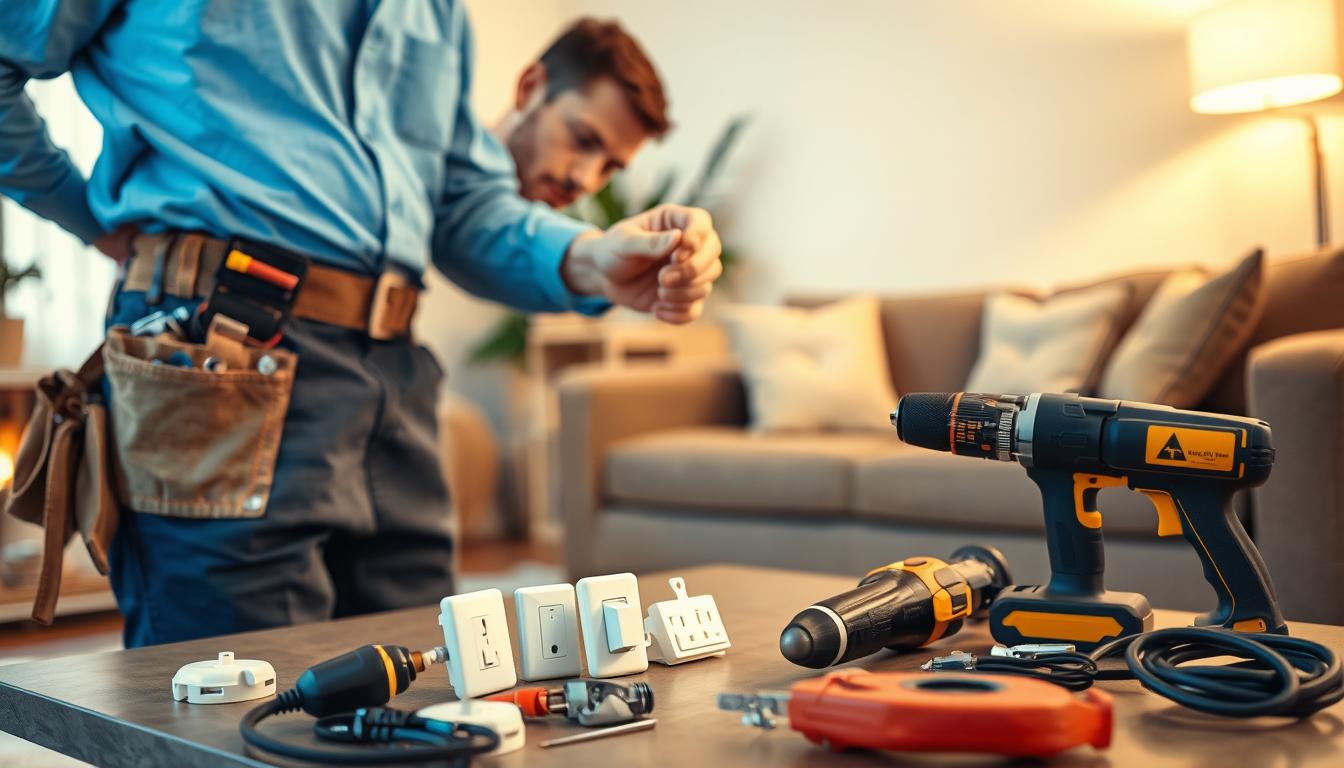
Seeing a loose light switch or a cracked socket? Don’t try to fix it yourself. These issues can lead to shocks or fires if not fixed right. A qualified electrician in South Africa can safely repair your electrical system and provide the necessary documents.
Many people choose to have professionals handle light switch and outlet work. They have the right tools, parts, and guarantees. Whether it’s a simple switch replacement or installing an outdoor plug point, it’s safer and quicker to hire a pro. You’ll also get clear prices and insured work, ensuring it meets South African safety standards.
Key Takeaways
- Contact a qualified electrician for any faulty light switch or socket to avoid electrical problems and fire risk.
- Small electrical repairs can include switch replacement, plug point installation and outdoor socket fitting.
- Licensed electricians provide guarantees, proper parts and compliance with South African electrical standards.
- Attempting DIY electrical work can void insurance and create long-term hazards in your electrical system.
- Choose an electrician who offers clear pricing, registration and proof of insurance for safe, reliable electrical work.
What we offer: common small electrical repairs and installations

Our team is ready to help with a variety of small electrical jobs. We fix everyday problems, improve safety in wet areas, and ensure all work meets safety standards. We also handle worn or loose fittings.
Light switch replacement and repair
- We fix faulty wall switches, swap dimmers, and replace night-lights.
- Our tasks include replacing ballasts and bulbs and mounting ceiling lights safely.
- We always check the wiring before testing the circuit.
Plug points and socket services
- We install new outlets indoors and outdoors, and replace damaged sockets.
- Our services include installing tamper-resistant and GFCI/safety outlets in kitchens, bathrooms, and outdoors.
- We fix outlets damaged by power surges, mis-wired plugs, and add outlets to prevent overloads.
Minor fittings and fixtures
- We install ceiling fans, pendant and recessed lighting, and media and TV cables.
- We add more plug points and run power boxes for appliances and decks.
- We use the right insulation and secure fittings. We test our work and advise on rewiring when needed.
Why you should choose a qualified electrician for small electrical repairs
Seeing a loose switch or a sparking socket is alarming. You need it fixed fast and safely. A qualified electrician keeps your home safe from shock and fire hazards. They follow local electrical standards and ensure legal compliance.

Safety and legal compliance
Let a registered electrician fix wiring faults to avoid dangerous shortcuts. They have the right tools and are often insured, giving you peace of mind. They can provide a certificate of compliance, proving the work meets standards and is legal.
Correct fault finding and lasting repairs
Accurate fault finding prevents small problems from becoming big ones. A qualified electrician uses systematic testing to find the real cause. This approach reduces repeat visits and avoids issues that could void your insurance.
Tools, parts and guarantees
Professionals bring the necessary tools and parts to do the job right. They replace damaged cables with suitable copper and fit approved devices. Work from a certified tradesperson often comes with a labour guarantee or warranty on parts, ensuring value for money.
- Clear, upfront pricing and honest advice
- Paperwork such as a certificate of compliance when required
- Reduced risk of electrical faults that lead to a structural fire
How we diagnose common electrical problems before repair
When you call us, we quickly check for obvious issues. We look for scorch marks, cracked outlets, and signs of overheating. We also check light bulbs and wiring for wear.
We manually check switches, sockets, and fittings for heat, stiffness, or looseness. Simple tests like tightening bulbs or swapping lamps help us find minor faults. We’re extra careful with outdoor and pool equipment.
Testing and electrical fault finding
Then, we isolate the circuit at the db board for detailed testing. Our electricians use special tools to find live wire, neutral wire, and earth faults. We check breakers, fuses, and RCDs to see if they’re working right.
- Verify breaker operation and fuse condition
- Locate hot, neutral and earth continuity
- Test GFCI/RCD and earth leakage protection
- Trace wiring runs to find intermittent faults
When wiring or rewiring is needed
Some problems need just a fix. But sometimes, rewiring is safer and lasts longer. We suggest rewiring for homes over 25 years old or with old wiring.
We tell you what we found and what options you have. You can choose repair, replace wiring, or full rewiring. We give a detailed estimate before starting work.
Typical costs, timeframes and what affects pricing
Booking a small repair means knowing the cost upfront. Companies might charge by the hour or offer fixed prices for simple jobs. Jobs like swapping a socket or replacing a light switch are usually quick and cheap.
Here’s what you need to know about the main differences and what to expect.
Hourly rates versus fixed-price jobs
Hourly rates start from a minimum and include travel time. You pay for labour and parts sourced during the visit. Fixed prices are better for tasks you know will be the same.
Prices can go up during busy times, for same-day visits, or after hours. Make sure the quote includes all costs, like materials and travel fees.
Factors that influence cost
What you choose for materials matters. Branded parts cost more than cheaper ones. The complexity of the job also affects the price.
Getting to the wiring can change the job’s scope. If walls need to be opened, it takes longer and costs more. The age and condition of cables, the need for new breakers, or adding circuits also increase the cost.
- Materials — quality and brand of parts
- Labour — hours needed for fault finding and repairs
- Access to wiring — attic, crawlspace or wall openings
- Scope — new circuits, panel upgrades or partial rewiring
How long repairs usually take
Simple jobs like replacing a socket or switch take 30 minutes to 2 hours. More complex tasks, like installing an outdoor outlet, might take half a day.
Partial rewiring or adding circuits can take several days. Whole-house rewiring can take weeks. Always ask for a time estimate so you know when to expect the electrician.
Safety upgrades and additions you may want while we’re on site
When we visit your home, we look for quick upgrades to boost electrical safety. We aim to future-proof your circuits. Small additions can cut the risk of shock and protect appliances from surges.
They also make it easier to add an EV charger or a new geyser later. We explain practical choices and how they fit into your overall planning electrical needs.
Install GFCI/safety outlets and earth leakage protection
Fitting GFCI units and safety outlets is a simple way to reduce electric shock near water. This includes kitchens, bathrooms, and outdoors. An earth leakage unit at the distribution board or at the socket adds another layer of protection for your family.
For homes older than 25 years, replacing worn outlets with tamper-resistant types improves electrical safety.
Surge protection and circuit improvements
Surge protectors guard televisions, fridges, and computers from sudden voltage spikes. Adding surge protection South Africa-friendly devices helps during load shedding and unstable grid moments. We can advise on upgrading the circuit breaker.
Adding dedicated circuits for heavy appliances such as a geyser or an EV charger is also possible. Fitting proper electric boxes for ceiling fans and heaters is another option.
Planning for future needs
Good planning electrical saves money later. We look at your current load and suggest circuit improvements. We estimate whether your board needs electrical upgrades to accept solar, EV charging, or a high-amperage entertainment area.
We will talk through options for extra sockets, surge protectors, and how to arrange circuits. This protects critical appliances during load shedding.
- Quick fit: GFCI or earth leakage unit at sockets or DB.
- Protect: Whole-home surge protection and point-of-use surge protectors.
- Upgrade: Add circuits or upgrade the circuit breaker for geyser and EV charger.
- Plan: Make allowances for solar or extra appliances to avoid repeat work.
These practical steps help you enjoy safer, more reliable power. We will show you options, explain costs, and carry out the agreed electrical upgrades while on site.
How we work: service process, guarantees and compliance in South Africa
When you need an electrician, you want a simple, trustworthy process. Our one-call approach offers clear upfront pricing and a scheduled arrival window. On site, the team does a careful assessment, isolates circuits at the DB board, and checks the main switch before starting any work.
Booking, on-site assessment and upfront pricing
- You can arrange a booking electrician by phone or online. Expect confirmation of the arrival window and scope.
- The on-site assessment includes visual checks, safe isolation at the distribution board and basic testing to confirm the fault and options.
- We provide clear, itemised quotes so you see costs for parts and labour. Upfront pricing removes surprises and helps you decide between repair, replacement or an upgrade.
Qualified, insured and registered electricians
- All our electrical contractors are qualified, registered electrician professionals and insured electrician teams who work to South African standards.
- Work is carried out with regard for compliance and local wiring regulations. We test circuits, protect the DB board and verify the main switch before restoring power.
- Where significant work is done, a certificate of compliance (COC) will be issued to confirm safe installation and meet regulatory requirements.
Aftercare, testing and documentation
- Aftercare includes RCD/GFCI testing and insulation resistance checks where applicable, plus tidy-up of the workspace.
- We supply documentation of work performed, warranty details for labour and parts, and guidance on safe use of appliances and extension cords.
- For peace of mind, our guarantees back workmanship and adherence to compliance, with contact details for any follow-up testing or support.
Conclusion
Small electrical repairs, like fixing switches and sockets, are common but risky. They can cause shock or even fires if not done right. Signs like sparking, buzzing, or heat mean it’s time to call an electrician, not try to fix it yourself.
Choosing a certified electrician ensures safety and proper repairs. They follow South African standards. You’ll get a team that’s qualified, insured, and registered. They offer clear prices, quality parts, and can even upgrade your safety with GFCI and surge protection.
The Cape Handyman Team is your go-to for electrical repairs in South Africa. Need help with a light switch or socket? Contact them for a professional visit. They’ll diagnose, quote, and fix it right, ensuring your home is safe and powered.
FAQ
Do you offer small electrical repairs like light switches or plug points?
Yes, we do. We replace and repair light switches and fit new plug points and sockets. We also change dimmers and light fittings. Our team handles minor mis-wirings.We work on both indoor and outdoor outlets. We install tamper-resistant units and safety GFCI/earth leakage outlets when needed.
What small electrical repairs and installations do you commonly carry out?
We replace faulty light switches and repair or swap wall sockets and plug points. We install outdoor receptacles and deck plugs. We fit dimmer switches and replace cracked or yellowed outlets.We also install or replace light bulbs and ballasts. We fix simple wiring tasks like mis-wired appliance plugs and wiring 2- and 3-way switches.
Do you install outdoor and safety outlets?
Yes, we do. We fit weatherproof outdoor outlets. We recommend GFCI/safety outlets for areas near water like kitchens, bathrooms, and gardens. Tamper-resistant outlets are available for homes with children.
Why should I choose a qualified electrician for small repairs?
Small faults can cause shock or start fires. A qualified electrician ensures work meets South African standards. They avoid voiding insurance and issue a Certificate of Compliance (CoC) when needed.Professionals provide correct diagnosis, safe repairs, and lasting results.
How does correct fault finding help my home?
Proper testing finds the real issue. It could be a faulty appliance, loose connection, degraded insulation, or overloaded circuit. This prevents repeat failures, reduces fire risk, and ensures the right fix.From a simple switch swap to adding a dedicated circuit for heavy appliances, we get it right.
What tools, parts and guarantees do you bring?
Our electricians bring the right tools and parts. We use quality parts, including copper where needed. We offer warranties on labour and parts.We provide documentation and testing after the work.
How do you diagnose common electrical problems before repair?
We start with a visual and manual inspection. We check for loose switches and sockets, scorch marks, discolouration, buzzing, heat, or sparking. If needed, we safely isolate the circuit at the distribution board and test with the right instruments.
What electrical testing and fault-finding steps do you perform?
We test fuses and breakers. We use volt detectors and multimeters to identify live, neutral, and earth faults. We check RCD/GFCI operation, measure continuity, and assess circuit load.This helps us find whether the fault is a bad connection, a failing component, or an overloaded circuit.
When is wiring or rewiring necessary?
Rewiring is needed if insulation is degraded, aluminium wiring needs replacement, or the home is over 25 years old. It’s also necessary if circuits are repeatedly overloaded or you need capacity upgrades for modern appliances.
Do you charge hourly rates or provide fixed prices?
We offer clear, up-front pricing. Small jobs are often quoted as fixed prices or hourly with a minimum. Larger or uncertain jobs receive an itemised estimate before work begins.Emergency or after-hours visits may incur higher rates.
What factors influence the cost of a repair?
Cost depends on labour time, parts quality, and accessibility of wiring. The age and condition of existing cables also matter. Additional trades (plastering) may be needed, increasing cost. Rewiring or panel upgrades cost more than simple swaps.
How long do typical repairs take?
Simple switch or socket replacements take 30 minutes to 2 hours. Adding an outdoor outlet or fixing a mis-wired appliance may take a half-day. Partial rewires or circuit upgrades can take days.Whole-house rewiring may take weeks. We provide arrival windows and time estimates before starting.
What safety upgrades should I consider while you’re on site?
We recommend fitting GFCI/safety outlets and earth leakage units. We install surge protection and add dedicated circuits for heavy appliances. Upgrading breakers prevents overloads.These measures reduce shock and fire risk and protect appliances during surges or load-shedding cycles.
Can you help plan for future electrical needs?
Yes. We advise on additional socket capacity for many appliances. We suggest dedicated circuits for geysers or EV chargers. We discuss options for load-shedding and recommend surge protection.
How does your service process work and what documentation do you provide?
You book by phone or online; we confirm an arrival window. On site, we assess, isolate the circuit at the DB, test, and explain options. We provide an itemised quote, complete the agreed work, test RCD/GFCI operation, and leave a tidy workspace.For significant work, we issue an electrical Certificate of Compliance (CoC) where applicable.
Are your electricians qualified, insured and registered in South Africa?
Yes. Our electricians are registered, qualified, and insured to work in South Africa. We follow local codes and standards, carry appropriate tools and parts, and back our work with warranties on labour and components.
What should prompt me to call an electrician instead of attempting a DIY fix?
Call a professional if you notice sparks, buzzing, or popping. If there’s heat at a switch or socket, frequent breaker tripping, scorch marks, loose or stiff switch action, or discoloured outlets. These signs indicate danger and should not be handled by unqualified DIY.
Do you offer emergency or after-hours service?
Yes. We provide emergency call-outs and after-hours assistance for urgent faults, with higher rates typically applying. For non-urgent issues, we arrange scheduled visits with clear timing and upfront pricing.


