
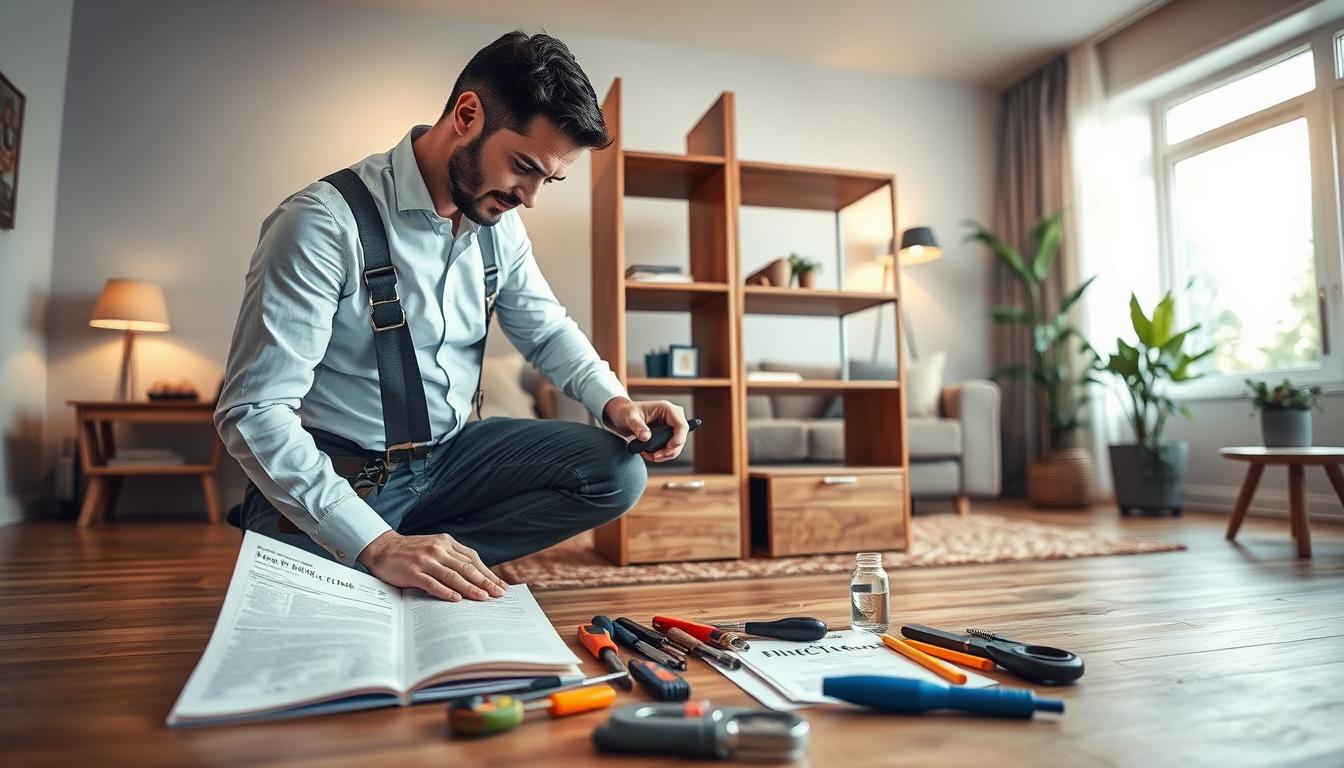
Have you ever looked at a box from IKEA or a local store and felt overwhelmed? Flat-pack furniture is made to save money on making and shipping. But, it often leaves people wondering: can you help with flat-pack furniture assembly? A professional handyman can quickly and safely put together furniture like beds, wardrobes, or study desks.
Getting a handyman to assemble your furniture saves you time and avoids mistakes. Services like TaskRabbit or Mr. Handyman have skilled assemblers. They bring the right tools and follow a step-by-step process. This means you get sturdy furniture without the hassle of trying to do it yourself.
In South Africa, many people choose to pay for professional furniture assembly. This way, they avoid DIY problems and ensure their furniture is safe and durable. A handyman will unpack, sort, assemble, and check everything. This way, your furniture is ready to use and will last longer.
Key Takeaways
- Flat-pack furniture is cost-efficient but may require skilled assembly.
- A handyman or assembly service can assemble flat pack furniture faster and safer than most DIY attempts.
- Professional assemblers bring the right tools and ensure correct anchoring and alignment.
- Using a service reduces the risk of damage and gives you peace of mind.
- Common examples include IKEA furniture, wardrobes, beds and desks.
Understanding flat-pack furniture and why homeowners choose assembly services

Flat-pack furniture is made up of panels and fittings in a box for you to assemble. It’s a cost-effective option compared to pre-assembled furniture. Brands like IKEA use simple designs to keep prices low.
What flat-pack furniture is and common brands you’ll encounter
Flat-pack items come with pictures to help you assemble them. IKEA’s MALM, KALLAX, and HEMNES are popular in South African homes. Even if you buy from other brands, a handyman familiar with IKEA can usually help.
Benefits of flat pack assembly: cost savings, customisation and easy transport
Flat-pack furniture saves money by reducing labour and transport costs. This means you can buy bigger pieces for the same price. You can also customise it with paint or new handles.
Its parts are easy to move, making transport simple. Hiring an assembler keeps costs down while ensuring your furniture is sturdy and well-made.
Typical problems people face when they DIY: confusing instructions, missing parts and stripped screws
Many DIY projects stall due to unclear instructions. Pictorial guides can be tricky, and missing parts are common. You might also find extra pieces that don’t fit.
DIY mistakes include using the wrong screw, leading to stripped screws or panels that don’t align. Professionals avoid these issues by checking parts and using the right tools.
Professional assembly offers cost savings and convenience. It saves you from frustration and wasted time. If DIY isn’t your thing, a skilled assembler can turn a flat-pack box into reliable furniture.
do you do flat-pack furniture assembly

Yes, a handyman can make building furniture easy. In South Africa, professionals handle many furniture tasks. They help with everything from small bedside tables to big wardrobes.
They offer friendly visits, expert advice, and ensure the job is done right. This brings you peace of mind.
How a handyman service answers that question: services offered and what to expect
You can book a service for one item or a whole room. They unpack, sort parts, and follow the instructions. They also place the furniture where you want it.
Some services also disassemble furniture for moves. They remove packaging and take away old furniture too.
Scope of work: unpacking, sorting parts, step-by-step assembly, anchoring and final checks
- They unpack and check each part against the list.
- They sort parts into trays to avoid mistakes.
- They follow the manual step by step, avoiding guesses.
- They level, align, and test furniture, then anchor tall units for safety.
- They do final checks, tighten screws, test stability, and clean up.
Tools and expertise a handyman brings: Allen keys, cordless drill, measuring tape, pliers and more
Assemblers come with a full set of tools. This includes allen keys, screwdrivers, a cordless drill, measuring tape, pliers, and spanners. They use the right tools and know-how to avoid mistakes and work faster.
They also have skills beyond tools. They know when to use two people, how to find substitutes for missing parts, and when extra fixings are needed. This makes the job easier and safer, lasting for years.
Common flat-pack pieces and specific considerations for assembly
When you order flat-pack furniture, the size and type of item matter. Small parts need a special approach compared to large items. A few top tips can save time and keep your home safe.
Small items
- Bedside tables, stools, and shelves are quick to assemble. Start by laying out small parts and fixings. This helps you count everything before you begin.
- Use the supplied Allen key for initial tightening. Then, switch to a powered driver on low torque for final turns. These tips prevent stripped screws and wobble.
- Store tiny pieces in a tray or labelled cups. This saves time and keeps your workspace tidy.
Medium pieces
- Desks, dining tables, and bookcases take longer and need careful alignment. Measure and square panels before tightening. This ensures smooth drawer operation.
- If a drawer sticks, check the runner alignment and cam locks. A small adjustment to one drawer can solve many problems.
- For desks with cable management, plan near sockets and pre-drill where needed. This keeps routing neat and unobtrusive.
Large items
- Wardrobes, beds, and office furniture are heavy and often need two-person lifts. Organise helpers and protect floors to avoid injury and damage.
- Anchoring large units to walls with the right wall anchors prevents tipping. Choose fixings that match your wall type and follow safety checks on hinges and joints.
- For sprawling wardrobes and large builds, work in stages. Unpack, sort, assemble panels, and complete alignment and adjustments before final anchoring.
Risks, don’ts and best practice during flat pack assembly
Before starting, prepare well. Read the instructions carefully and clear a space for work. Use protective sheets and floor protection to avoid damage.
- Read the instructions carefully and follow them in order. Skipping steps or reversing the order can cause problems.
- Count and sort every screw, dowel, and cam before starting. Double and triple check to avoid leftover parts.
- Keep your workspace clear with an outlet for tools. Regular checks and measured fitting help keep things aligned.
- Use a torque-controlled driver or hand tools for final tightening. This ensures the right torque and avoids stripped heads.
Don’ts
- Don’t force parts together. This can cause misalignment, bent panels, and stripped screw heads.
- Avoid skipping steps. Each step locks the previous one in place; skipping can weaken joints or prevent doors from closing.
- Don’t use the wrong screw or too much glue where it’s not needed. The wrong screw can split or blow out particleboard. Too much glue can damage finishes and make disassembly hard.
Follow these tips to avoid damaging furniture and floors. Use two people for heavy or large panels to prevent bending or chipping. Check levels and alignment as you go to catch problems early.
To avoid damage, protect the floor with sheets and move pieces carefully. Treat cam locks and particleboard fixings gently and apply the correct torque to fasteners. This approach reduces damage to furniture and keeps warranties valid.
Hiring a handyman for flat pack assembly: cost, timing and peace of mind
Choosing a handyman for flat pack work is clear on cost, timing, and practicality. You know the typical timeframes and pricing factors. You also get the assurance that an experienced assembler will follow safety checks and leave your space tidy.
Typical timeframes: from small builds to large wardrobes and the difference between DIY and pro assembly
Expect big time savings with a professional. For small builds like a bedside table or stool, a pro can do it in 15–30 minutes. DIY takes 30–60 minutes.
Desks, dining tables, and bookshelves take a pro 45–60 minutes. DIY can take 1–2 hours. Beds need 1–2 hours with a handyman and 2–3 hours DIY. Large wardrobes and heavy units need 2–3 hours with a pro and 3–5 hours DIY.
Pricing factors: complexity, number of pieces, anchoring, travel and additional services like disassembly or moving
Pricing depends on complexity and the number of pieces. Simple items cost less, while multi-drawer or mirrored wardrobes cost more due to extra labour and special fixings.
Ancillary tasks like anchoring, travel, disassembly, or moving furniture add to labour time. Some handymen charge by the hour, others per item. Booking multiple pieces together can be more affordable.
Service guarantees and what gives you peace of mind: experienced assembler, correct tools, cleanup and safety checks
Look for service guarantees that cover workmanship and liability. A reputable provider will send an experienced assembler with the right tools and offer a guarantee for their work.
Peace of mind comes from visible safety checks, secure wall anchoring, careful cleanup, and clear communication about parts replacement. If you value time savings, proper safety checks, and a tidy finish, hiring a trusted handyman is a practical choice.
Conclusion
Flat-pack furniture is cheap, easy to move, and lets you customise your space. But, it can come with confusing instructions, missing parts, and wear from being put together many times. It’s wise to think about the cost savings against the hassle before starting.
If you don’t want the stress, many places in South Africa offer handyman services for flat pack assembly. A professional has the right tools, works fast, and knows how to do it right. They can also take things apart or move them if you change your mind.
Choosing a handyman means you get safer and correct assembly, fewer DIY errors, and a final check for peace of mind. Whether you ask a local handyman or book through an app, you get furniture that’s put together right and less disruption to your day.
FAQ
Do you do flat-pack furniture assembly as a handyman?
Yes, professional handymen offer flat pack assembly. They unpack and sort parts, follow instructions, and assemble the item. They also make final adjustments and clean up. Hiring a pro saves time and ensures the item is stable and correctly installed.
What is flat-pack furniture and which brands will I commonly encounter?
Flat-pack furniture is shipped in flat panels with nuts, bolts, and instructions. Brands like IKEA, MALM, KALLAX, and HEMNES are common. Other brands use similar systems for easy assembly on site.
What are the main benefits of choosing an assembly service for flat pack furniture?
A professional assembler saves you money and time. They ensure the furniture is built correctly and safely. They also offer a tidy finish and can disassemble, move, and remove packaging or old furniture.
What typical problems do people face when they try to assemble flat packs themselves?
People struggle with unclear instructions, too many screws, and misoriented panels. DIY mistakes include using the wrong screws and misaligning drawers. These can cause instability or damage.
What exactly will a handyman do when assembling my flat-pack furniture?
A handyman unpacks and sorts parts, checks the inventory, and organises hardware. They follow the manual, assemble the piece, and level and align drawers and doors. They also anchor large units and perform final checks.
Which tools and expertise does a professional assembler bring?
Professionals bring a full kit of tools, including Allen keys, screwdrivers, and a cordless drill. They know how to avoid damage and spot incorrect or missing fittings.
What are the quick tips for assembling small flat‑pack items like bedside tables or stools?
Clear a working space and lay protective sheets. Sort and count small parts and follow the manual step-by-step. Use the supplied Allen key and test stability before placing the item.
Any special considerations for medium pieces such as desks, dining tables or bookcases?
Medium items need accurate alignment for smooth operation. Lay out parts in order and double-check hardware counts. Use a spirit level frequently and adjust as needed.
What extra precautions are needed for large pieces like wardrobes, beds and office furniture?
Large units require two-person handling and temporary supports. Professionals ensure correct fixings and perform safety checks. They advise on floor protection during heavy lifts.
What are the key Do’s during flat pack assembly?
Read instructions thoroughly and prepare a clear workspace. Sort and count parts first and use protective sheets. Use correct torque settings when tightening fastenings.
What are the Don’ts to avoid damaging furniture or voiding warranties?
Don’t force fittings or skip steps, and avoid using the wrong screws. Don’t add non-recommended glue or adhesives. Avoid working alone on heavy panels and neglecting anchoring large units.
How can I avoid scratches and damage to floors and panels during assembly?
Lay down protective sheets and mask edges where panels will be moved. Use padded supports or clamps during assembly. Employ two people for large panels to prevent damage.
How long does assembly usually take compared with DIY?
Professional assembly is faster than DIY. Small items take 15–30 minutes for pros versus 30–60 minutes for DIY. Medium items take 45–60 minutes for pros versus 1–2 hours for DIY. Large items take 2–3 hours for pros versus 3–5 hours for DIY.
What factors affect the price of hiring a handyman for flat‑pack assembly?
Price depends on item complexity, number of pieces, and need for wall anchoring. Travel distance and extra services also affect the price. Ask for a clear quote that lists travel, labour, and any additional fees.
Do professional services offer guarantees or workmanship assurances?
Reputable services offer guarantees and clear communication on parts replacement and liability. They provide correct tools, safe anchoring, and a clean finish for peace of mind.
Will hiring a pro affect my manufacturer’s warranty?
No, using a qualified assembler should not void the manufacturer’s warranty. Professionals can identify missing parts and advise on replacements to preserve warranty coverage.
Can assembling flat‑pack furniture be customised or adapted during installation?
Yes, flat-pack pieces can be customised with finishes, paint, or small modifications. Professional assemblers can carry out minor adaptations while protecting the piece’s integrity and appearance.
Do assembly services also help with disassembly, moving and disposal?
Many services offer additional services like disassembly for moving, installation, repositioning, and removal of packaging or old furniture. These extras add convenience and can be included in a single booking.
What should I prepare before the assembler arrives?
Clear a working space, move clutter and precious items out of the way, and ensure an electrical outlet is available. Designate where you want the finished item placed. If the piece requires wall anchoring, provide access to the wall and inform the assembler of wall types if known.


