
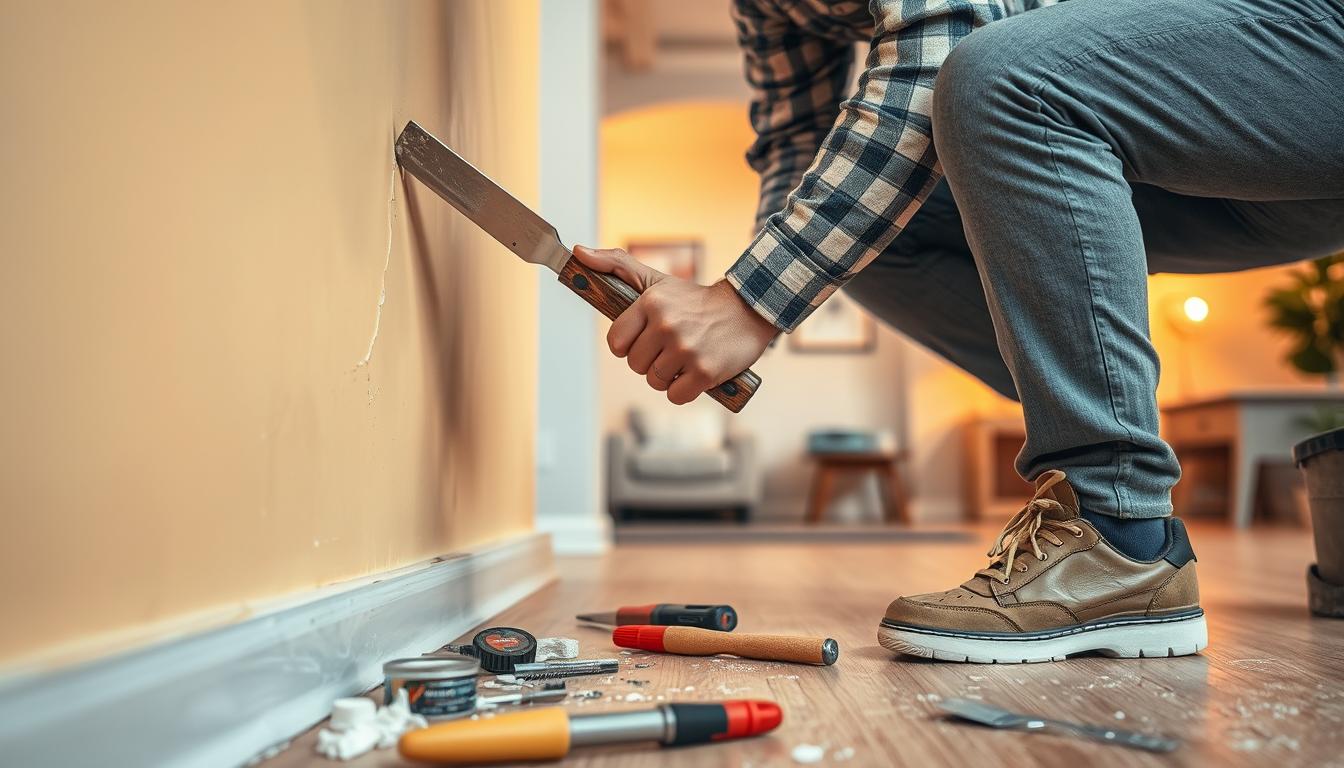
Yes, you can fix cracks in walls and then paint them to look new. This works for most cases, as long as you know the type of crack and use the right fix. Small cracks, nail pops, and minor holes are easy to fix and prepare for painting.
Getting ready for paint is key. First, check the crack, clean it, and widen it if needed. Then, pick the right filler or mesh tape. Let it dry and cure well, sand it, prime, and paint last. Painting over cracks without fixing them will only make them show again.
Some cracks need more than just filler. Big or moving cracks might need mesh or fibrous plaster to stop them from coming back. For big jobs or if you’re unsure, Cape Handyman Team in South Africa can help. They do repairs, plastering, and check structures to make sure your paint job lasts.
Key Takeaways
- Most minor cracks can be repaired and repainted to restore interior walls.
- Thorough preparation—inspection, cleaning, filling, sanding and priming—is essential for a good paint job.
- Use filler for hairline cracks; use mesh tape or fibrous plaster for wide or active cracks.
- Allow proper drying and curing before sanding and applying new paint, such as Dulux or equivalent quality paint.
- Call a professional like Cape Handyman Team for large repairs or structural concerns.
Understanding can you repair cracks in walls and paint them
Before you start painting, take a close look at the crack. A quick check can tell you if it’s just a surface issue or something more serious. Painting over cracks that are moving won’t fix the problem for long.

Why you should assess cracks before painting
It’s important to check cracks before painting to ensure your fix lasts. Small cracks can be filled and painted easily. But, if the crack is moving, you need a different solution.
To see if a crack is moving, press gently on it. If the plaster moves or comes off, it’s not just a surface problem. This test helps you figure out if you need to fix the wall first or just fill it.
Common causes of wall cracks in South African homes
In South Africa, homes get different types of cracks due to the weather, soil, and age. Shrinkage cracks are common and look like spider webs. They’re usually just cosmetic and easy to fix.
But, settlement cracks and structural damage are more serious. They happen when the foundation moves or when there’s uneven load. These cracks are often long and vertical, showing deeper issues.
Moisture in walls also causes cracks. Rain, damp, or leaks can make plaster peel and paint not stick. In older homes, you’ll see a mix of shrinkage, settlement, and moisture-related cracks.
Understanding why cracks happen helps you fix them right. Cosmetic cracks can be filled and painted. But, if a crack is moving or shows structural damage, you need to fix the wall first or get a professional.
Types of wall cracks and how they affect paint jobs
Before you paint, it’s important to know the type of wall cracks you have. Some are just minor blemishes. But others can mean serious movement that will ruin your paint job unless fixed right.

Superficial cracks and cosmetic cracks
Superficial cracks include hairline cracks, shrinkage lines, and minor crazing. These are thin lines on plaster and plasterboard. They usually don’t mean the wall is failing. You can fix them with a light filler or skim plaster, sand them down, and then repaint.
Structural cracks and active cracks
Structural cracks are wider and often follow mortar lines or run vertically through brickwork. Active cracks show movement and may open and close over time. You might see the same crack on both sides of a wall or gaps that change after rain or load shifts. These cracks are often caused by foundation issues, masonry breakage, or plasterboard detachment. If the movement continues, paint and rigid stuccoes will crack again unless you fix the problem.
Cracks in different wall types
Plaster walls made from lime, gypsum, or cement can shrink, peel, and detach. Small cracks in plaster can be patched, but deep detachment may need removing and reapplying plaster or mesh.
Plasterboard and drywall often suffer from panel detachment and nail pops. These are usually fixed by re-screwing panels, applying mesh tape, and finishing with joint compound for a smooth surface ready for paint.
Cracks in brickwork need careful checking. Some need full masonry repair. Others can be managed with grout injection, mesh bridges, and fibrous plasters when you don’t need to fix the structure.
- Tiled walls or floors: cracks often follow tile joints and need gap levelling before any plaster or mesh overlay.
- Where movement exists: consider flexible over-paintable materials. Rigid coatings will fail on active cracks.
Preparing the surface: inspection, cleaning and opening the crack
Before starting any repair, assess the area carefully. Good preparation helps your paint job last longer and saves time. Look at the cracks’ pattern and location to choose the right method.
How to inspect and test for movement
Walk around and check the cracks closely. Look for long vertical cracks and check both sides of walls if you can. Use a marker to mark short lines across the crack and check again after a few days.
Apply gentle pressure on both sides of the crack to test for movement. See if the crack follows a brick pattern or goes through plaster alone. If it moves under light pressure, you’ll need a flexible repair.
Cleaning, widening and removing loose material
Make a clean channel for the filler to bond well. For small cracks, use a utility knife or a crack opener to widen the edges slightly. Remove loose plaster and dust down to a solid base.
If plaster is peeling, cut back the loose area and find stable material behind. Use a putty knife or scraper to clear debris, then vacuum or brush away dust. Use a damp sponge to remove fine particles and let it dry before applying any compound.
Tools and materials you’ll need
- Utility knife, scraper or putty knife for opening and cleaning cracks.
- Hammer and screwdriver for counter-sinking nail pops and freeing loose plaster.
- Sanding block or sandpaper (medium and fine grits) to sand and feather edges.
- Sponge or damp cloth for cleaning crack surfaces and removing dust.
- Vacuum or brush for thorough dust removal prior to filling.
- Quality crack filler, joint compound, putty for small holes and fibrous plasters such as Anticrack.
- Mesh tape in narrow and wider widths for reinforcement on active or wide cracks.
- Sheetrock screws to re-secure loose plasterboard panels where necessary.
- Stain-blocking and adhesion-promoting primer plus final paint brands like Dulux or a trusted local equivalent.
Practical tips: counter-sink nail pops and replace or add screws into studs to secure panels. Create a clean edge around the crack to improve adhesion and ensure the substrate is fully dry before you apply plaster or filler. Use the right tools and materials to reduce repeat cracking and achieve a smooth finish ready for paint.
Repair methods: from hairline to large cracks
First, figure out the crack’s type and size. This helps you pick the best fix. For tiny hairline cracks, a simple fix works well and saves time. But for bigger cracks, you’ll need to do more layers, use the right stuff, and wait for it to dry right.
Filling small and hairline cracks
For tiny cracks, widen the area a bit to get rid of dust. Use a good crack filler or joint compound. Spread it with a putty knife to fill the gap. After it dries, sand it lightly. If it’s not even, do it again until it matches the wall. Then, prime and paint it.
Repairing larger and deep cracks
For big cracks, take out the loose stuff to get to solid. Fill it in layers with the right stuff, letting each layer dry to avoid shrinkage. Use elastic or fibrous plaster for areas that move a lot. This lets the repair move with the wall without cracking.
Using mesh tape and fibrous plasters for active or wide cracks
For cracks that move, put a thin mesh tape along the crack. Cover it with fibrous plaster like Anticrack. Once it’s set, add a wider mesh tape and more plaster. This makes a strong base under the finish, helping it not to crack again.
Repairing plasterboard panel detachment or nail pops
To fix plasterboard, screw it back to studs. For nail pops, sink the nails and screw in sheetrock screws on both sides. Fill the holes with joint compound, smooth it, sand, prime, and paint.
Always follow drying times and use the right products. Use the right tools, like a putty knife, for a smooth finish. Doing it right means your repair will last without showing hairline or large cracks.
Finishing for painting: sanding, priming and achieving a smooth surface
After repairs dry, your finishing work is key to a great paint job. Sanding, priming, and matching texture make your wall smooth. This ensures paint adheres well and covers past flaws.
Sanding and feathering for a smooth wall
Start with medium-grit sanding to smooth out filler ridges. Finish with fine grit for a seamless blend. Use light, even strokes to avoid over-sanding.
Wipe away dust with a damp sponge or vacuum before priming. Clean surfaces help paint stick better and prevent pinholes in the final coat.
Priming and promoting paint adhesion
Choose the right primer for your repair. Use a sealing or bonding primer for deep or fibrous plasters. For discoloured patches, opt for a stain-blocking primer. One coat of quality primer seals porous filler and ensures top paint coats stick well.
Remember, paint coats are thin. Without the right primer, repairs may show or paint won’t stick well when you repaint.
Matching texture and paint coatings
Before painting, match the wall’s texture. For stucco or Venetian plaster, use similar techniques or a textured skim. Small texture differences can be smoothed with sanding and the right paint sheen.
If many repairs cover a large area, consider a uniform skim or textured coating. This ensures a consistent look and makes finish paint coats even.
Apply one coat of primer, then two coats of finish paint like Dulux. Follow drying times on the product labels. After the final coat dries, check for pinholes, flaking, or cracks. Touch up as needed to finish your paint job.
When not to DIY: recognising structural issues and when to call Cape Handyman Team
Small hairline cracks can usually be fixed by yourself. But, if you see signs of damage beyond just looks, it’s time to think twice. Large cracks, those that follow brickwork, or cracks on both sides of a wall are serious.
Cracks that move when pressed, or doors and windows sticking, mean you need experts. Also, if cracks keep coming back after you’ve fixed them, it’s time to call for help. Signs like moisture, leaking roofs, or plaster falling off are clear warnings.
Signs that indicate professional intervention
- Large cracks that widen over time or follow mortar lines, suggesting foundation settlement.
- Cracks visible on both faces of a partition wall or those accompanied by movement when probed.
- Repeated failure after repair, persistent damp, or areas of plaster that have detached from the substrate.
What professionals will do differently
- Diagnose root causes such as foundation movement, thermal stress or moisture damage before choosing a repair method.
- Stabilise the substrate where needed, using masonry repair, underpinning referrals or specialist fixings to restore structural integrity.
- Apply mesh bridging, fibrous or gap-levelling plasters with correct sequencing and cure times, then finish with matching texture and paint systems.
- Provide guarantees, use specialist products and coordinate with structural engineers or builders if major work is required.
How Cape Handyman Team can help in South Africa
Cape Handyman Team offers inspections and diagnoses cracks across South Africa. They tell you if a crack is just for show or if it’s serious. They do plaster and drywall repairs, mesh bridging, and fix panels.
For big repairs, they suggest the best options and manage drying times for your area. They make sure the surface is ready for painting. If it’s a big job, like fixing the foundation, they work with engineers and builders for you.
If you’re not sure about the damage or if you need a pro, it’s best to call them. Getting it checked early can save your home and avoid expensive fixes later.
Conclusion
You can fix cracks in walls and paint them for a fresh look. First, find out what kind of crack you have. Use the right method for each type.
For small cracks, a filler and sanding will do the trick. This makes the wall smooth for painting. But for bigger or moving cracks, you need mesh tape and fibrous plaster. These stop the crack from coming back and make the wall stable.
Before you start, check if the crack is moving. Clean and make the crack wider if needed. Fix any plasterboard issues or nail pops first.
Priming and matching the texture are important. They help the paint stick well and prevent the crack from showing again. Take your time and follow these steps for the best results.
If you see big problems or can’t fix it yourself, call Cape Handyman Team. They offer professional help for a perfect finish. For small cracks, you can try fixing it yourself with the right tools and patience.
Check your cracks, get the right materials, and decide if you can do it yourself. Or, call Cape Handyman Team for expert help. This way, you’ll get a lasting and beautiful finish.
FAQ
Can you repair cracks in walls and then paint them to achieve a refreshed look?
Yes, most cracks can be fixed and painted well. First, check if the crack moves. Clean and widen it if needed. Then, fill it in layers, letting each dry before moving on.Sand and prime the area, then paint with quality paint like Dulux. Painting over bad cracks will only hide them temporarily.
Why should you assess cracks before painting?
Checking cracks first is key because they can be different. Cosmetic cracks can be painted over, but active cracks need more work. Testing for movement helps you choose the right fix.
What are common causes of wall cracks in South African homes?
Cracks often come from drying plaster or mortar, moisture changes, or foundation issues. The local climate and soil can also cause problems. Moisture can lead to flaking and poor paint adhesion.
What are superficial or cosmetic cracks and how do they affect a paint job?
Cosmetic cracks are small and usually don’t move. You can widen them, fill them, sand, and prime before painting. If done right, paint will cover them up.
What are structural or active cracks and why are they different?
Active cracks are caused by deeper issues like foundation problems. They often need more than just filling. Simply painting over them won’t fix the problem.
How do cracks differ by wall type (plaster, plasterboard, masonry)?
Plaster walls can peel and need fixing. Plasterboard might show nail pops. Brickwork cracks can be serious and need special care.
How do you inspect and test a crack for movement?
Look at the crack pattern and check both sides of walls. Press gently near the crack to see if it moves. Mark the ends and watch for movement over days.
How should you clean and prepare a crack before repair?
Make the crack wider for better filling. Remove loose plaster and dust. Ensure the area is dry before filling.
What tools and materials will you need for typical crack repairs?
You’ll need a utility knife, putty knife, and sandpaper. Also, a hammer, screwdriver, sponge, and vacuum. Use quality fillers, joint compound, and paint like Dulux.
How do you fill hairline and small cracks?
Widen the crack, clean it, and apply filler. Smooth it out and let it dry. Sand lightly and repeat if needed. Prime and paint afterwards.
How are larger or deep cracks repaired to avoid shrinkage and recurrence?
Remove loose material and fill deep cracks in layers. Use flexible plasters for better movement. For deep gaps, consider mechanical fixing or specialist products.
When and how do you use mesh tape and fibrous plasters?
Use mesh tape and fibrous plaster for active cracks. Apply a narrow mesh tape, embed it, and cover with plaster. For severe cracks, use wide mesh bands.
How do you repair plasterboard detachment and nail pops?
Secure loose plasterboard with screws. Fix nail pops by adding screws. Fill depressions with compound, sand, prime, and paint.
How should repaired areas be sanded and feathered before painting?
Sand lightly with medium then fine grit. Avoid over-sanding. Clean thoroughly before applying primer for a smooth finish.
What priming is needed after crack repairs?
Use a sealing primer on porous surfaces. Stain-blocking primer may be needed in some cases. Priming ensures good adhesion and a smooth finish.
How do you match texture and ensure an even paint finish?
Match the wall texture before priming. For uniformity, skim-coat or retexture the wall. Apply primer and two coats of paint for even coverage.
What signs indicate you should call a professional like Cape Handyman Team?
Call professionals for large, active cracks, or those that follow bricks. Also, for cracks visible on both sides, significant movement, or recurring issues after DIY fixes.
What will professionals do differently from a DIY repair?
Professionals diagnose and fix root causes. They use the right materials and techniques. They ensure proper curing times and offer guarantees.
How can Cape Handyman Team help homeowners in South Africa?
Cape Handyman Team offers various repair services. They assess cracks, fix plaster and drywall, and repaint homes. They advise on the best materials and drying times for the climate.
What practical steps should you take right now for minor cracks?
Check if the crack moves, gather tools, and clean the area. Fill and let it dry, then sand and prime. If unsure, contact Cape Handyman Team for professional help.


