
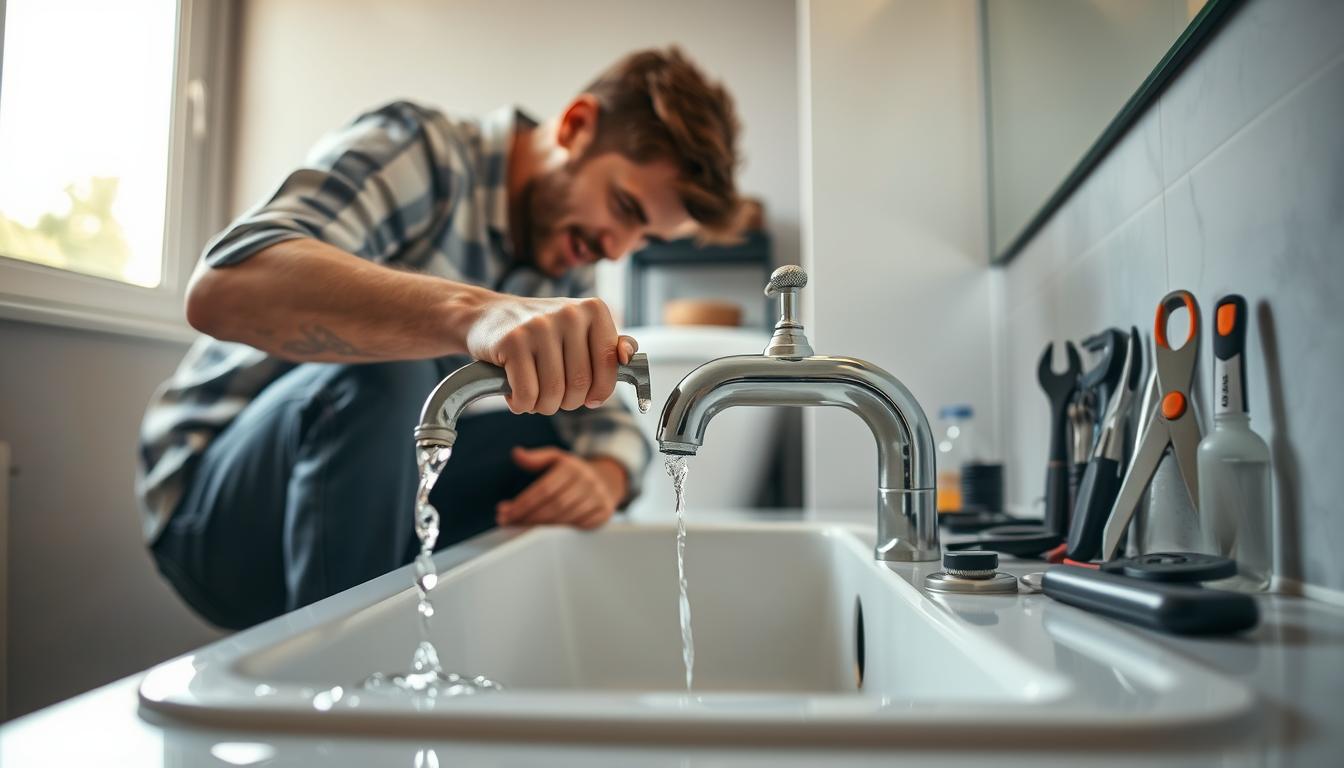
Have you noticed a leaking tap or toilet? You’re not alone. Small drips can quickly become big problems and increase your water bills. This guide will help you figure out the issue, try DIY fixes, and know when to call a plumber in Cape Town.
Local experts like the Cape Handyman Team and services like Mr. Handyman are reliable. They have insured, experienced tradespeople ready to help. They can diagnose leaks, replace washers and seals, and fix valves. They also offer quick help when you need to turn off the water supply.
This guide will teach you how to spot leaks in taps and toilets. You’ll learn about the tools and parts you need for DIY repairs. You’ll also know when it’s time to call a professional. Plus, you’ll find tips and videos from tradespeople who share their repair steps online.

Key Takeaways
- Even small drips matter: they waste water and raise bills.
- You can often fix a leaking tap or toilet with basic tools and parts.
- Isolate the main water supply before attempting any repair.
- Use local, licensed teams like the Cape Handyman Team for complex or emergency jobs.
- Keep evidence of repairs and seek an emergency plumber in Cape Town for urgent leaks.
Why fixing leaks matters: costs, water conservation and common risks

Small leaks might seem minor, but they can quickly add up. A dripping tap or a running toilet can waste a lot of water. This increases your water bills and can strain the community’s water supply during droughts.
How a dripping tap or running toilet wastes water and increases bills
A dripping tap can waste tens to hundreds of litres each month. A running toilet wastes even more, losing litres every hour. You might not notice the waste until you see the higher bills. Fixing these leaks quickly is the best way to save water and money.
Potential damage to your home from unattended leaks
Ignoring leaks can damage your home. Moisture can rot floors and harm timber. It can also cause mould and mildew, which are harmful to your health and belongings. Fixing leaks early prevents these problems and saves you from expensive repairs.
Legal and health considerations in South Africa
In South Africa, water restrictions are strict during dry seasons. Not fixing leaks can lead to fines if your water use goes up. Leaks can also affect hygiene, causing bad smells and health risks. It’s important to address these issues quickly.
Fixing leaks is essential for saving money and keeping your home safe. It helps conserve water and prevents costly repairs and higher bills.
How to diagnose the problem: identifying tap and toilet leaks
Start by taking a calm, methodical approach to diagnose the issue. A basic inspection often reveals clear symptoms of a leaking tap or a leaking toilet. Use simple tests before you consider advanced leak detection or calling a plumber.

Symptoms to watch for
Look for visible dripping at the spout or base if you suspect a leaking tap. Reduced water pressure, wet cupboards beneath the sink, and water stains give the same clue.
If the problem is a leaking toilet, you may hear a constant running sound or notice the cistern repeatedly topping up. Water around the base, intermittent refilling, and an unexpected rise in your water bill are common symptoms to note.
Tools and simple tests to locate the leak
Gather a cloth and a bucket. Dry areas around fittings with the cloth to reveal fresh damp patches. Place the bucket beneath supply lines to catch slow drips and check for leaks at connections.
In quiet conditions, listen for drip sounds. If you cannot hear anything, try a food colouring test in the cistern: add a few drops, wait 15–30 minutes, and see if coloured water appears in the bowl. That simple video-friendly test often shows a silent flush leak.
When the leak is hidden — valves, supply lines and seals
Hidden leak signs include staining on ceilings below bathrooms or unexplained damp in walls and skirting. Inspect isolating valves, flexible supply lines, shut-off valve connections, and seals under taps and toilets.
Check the nut and cap fittings and the condition of O-rings. If visual checks fail, professionals use thermal imaging and acoustic devices for leak detection. You can watch a short youtube video from a reputable plumbing brand to learn basic checks before you call in experts.
Essential tools and replacement parts you’ll need for DIY repairs
Before you start, gather a compact kit. This way, you can remove and replace parts quickly. A steady approach saves time and reduces the need for professional help.
Basic toolkit
- Spanner set and adjustable wrench to fit cap and nut sizes; wrap jaws with a cloth to protect chrome.
- Flat and Phillips screwdriver; a small head helps you remove handle screws cleanly.
- Pliers and an adjustable basin wrench for tight or hard‑to‑reach fittings.
- Cloth and a bucket to catch water and keep parts steady while you work.
Common replacement parts
- Rubber washer packs in assorted sizes to match washer dimensions on older taps.
- O‑ring sets and spare rings for valves and spindles.
- Ceramic cartridge or standard cartridge units for mixer taps; carry the old cartridge with you when buying a replacement.
- Replacement valve components, cistern seals and cap and nut assemblies for toilet repair.
How to choose compatible parts
First, identify the tap or cistern type: washer‑type, cartridge, or ceramic disc. Note any brand markings and measure the stem size; accurate stem size helps you match cartridge fitment.
Measure washer dimensions and ring diameters before you buy replacements. For ceramic cartridge swaps, match the manufacturer part number when possible. If you remove a cap and nut, keep them together so you can replace the exact nut or ring without guesswork.
When in doubt, take the faulty part to a hardware store or consult a technician. Professional teams stock certified parts and can show you the correct replacement that will stay steady after installation.
Fix a leaking tap or toilet
This guide shows you how to fix a leak step by step. It’s safe and easy to do. Read each section before starting. Have a cloth, bucket, and tools ready to avoid surprises.
Prepare and isolate the water supply
- Find and turn off the water supply at the isolating valve under the sink or the cistern valve.
- If there’s no isolating valve, turn off the main water supply. Then, open the tap or flush the toilet to drain any water left.
- Put a cloth and bucket under the work area to catch any spills while you work.
Remove handles, caps and unscrew fittings
- Remove decorative caps by turning them anticlockwise with a flat screwdriver. Then, take off the handle screws and lift the handle.
- Loosen the cap and nut with a spanner or wrench. Use a cloth to protect chrome from scratches.
- For mixer cartridges, unscrew the retaining nuts or clips. Pull the cartridge straight out. Check the manufacturer’s guide for specific models.
Replace washers, cartridges or valve parts; reinstall and test
- Take out the old rubber washer, O-ring, or cartridge. Clean the seat and valve area to remove limescale and debris.
- Put the new rubber washer or cartridge in the right way. Replace the retaining nuts and caps. Then, put everything back in reverse order.
- Slowly turn the water on. Check for leaks at supply lines, nuts, and cap joints.
- Operate the tap or flush the toilet several times. This checks if parts move freely and the repair works.
Common DIY pitfalls to avoid
- Don’t overtighten fittings. Too much torque can crack ceramic or strip threads.
- Avoid forcing corroded nuts without penetrating lubricant and the right tools. Use a proper spanner on chrome surfaces.
- If stems feel stiff, threads are damaged, or parts are corroded, stop and call a professional. Forcing can cause more damage.
Work anticlockwise to loosen screws and fittings. Keep a screwdriver, spanner, and adjustable wrench ready. After reassembly, make sure seals sit flat. Test the repair thoroughly to check for leaks and smooth operation.
When to call an expert plumber or the Cape Handyman Team
If a repair seems too hard, it’s best to get a pro. Small issues can hide big problems. A local expert can tell you if a simple fix will do or if you need a new part.
Signs you should stop DIY and contact an expert
- If you find damaged threads on fittings, stop and seek help. Stripping a thread can make a leak worse.
- Stiff stems that won’t move often mean corrosion or seized parts. Forcing them risks more damage.
- Cracked bowls or cisterns require urgent attention. A cracked ceramic part can fail suddenly and cause flooding.
- Repeated failures after replacements, or leaks concealed in walls and floors, are clear reasons to call a professional.
Benefits of hiring a licensed, insured local expert
- A licensed team such as the Cape Handyman Team understands Cape Town’s plumbing standards and water restrictions.
- Insured tradespeople protect your property and their workers during repairs.
- Local plumbers keep parts for regional fixtures so they can make sure all parts fit correctly and speed up repairs.
- Experienced technicians provide a solid diagnosis and can recommend sensible maintenance to prevent repeat issues.
What to expect from a professional visit
- The plumber will start with a thorough diagnosis, using visual checks and, when needed, advanced leak detection.
- You will get upfront pricing and a clear quote before work begins, with no hidden costs.
- Many teams carry stocked vans for same-day repairs so you avoid multiple visits.
- Repairs are completed to industry standards, tested for leaks and backed by a guaranteed repair or follow-up support.
- You can discuss ongoing maintenance plans to keep systems reliable and reduce emergency call-outs.
If you’re not sure, choose an experienced local service and call a professional. A quick, licensed visit can save time, limit water damage, and give you peace of mind.
Conclusion
Fixing small repairs quickly keeps your home safe, working well, and looking good. By following simple steps, you can often fix leaks in taps or toilets yourself. Doing DIY repairs boosts your confidence, saves water, and cuts down on bills.
Always check for leaks after fixing something. Watch out for damp or mould too. If you face tough stems, broken threads, cracked ceramics, or leaks that won’t stop, it’s time to call a plumber. A team like the Cape Handyman Team offers expert advice, clear prices, and guaranteed repairs.
Emergency and same-day services can quickly fix problems and get things back to normal. Professional maintenance also offers long-term, eco-friendly solutions. For help, look up video tutorials or contact local plumbers or the Cape Handyman Team. Your quick action will fix issues, save water, and keep your home running smoothly.
FAQ
Can you fix a leaking tap or toilet — Cape Handyman Team?
Yes, the Cape Handyman Team can fix most leaking taps and toilets. They do inspections and repairs on the same day if parts are available. They also carry tools and parts for many jobs in one visit.If DIY fails or you find damage, call a professional for a guaranteed fix.
How does a dripping tap or running toilet affect my water bill and the environment?
A dripping tap wastes a lot of water each month. A running toilet wastes even more. This increases your water bill and puts a strain on water resources, which is bad under South African water restrictions.Fixing leaks saves water, cuts costs, and helps meet local water conservation laws.
What home damage can unattended leaks cause?
Leaks can stain and warp floors and skirting. They can soak into cabinetry and rot subfloors. They also encourage mould and mildew growth.These problems lead to higher repair costs and health risks if not fixed.
Are there legal or health reasons to repair leaks promptly in South Africa?
Yes, there are. During droughts, not fixing leaks can break bylaws. Leaks that affect sanitation, like running toilets, pose hygiene risks and odour problems. So, fixing them quickly is essential.
What are the common symptoms of a leaking tap versus a leaking toilet?
A leaking tap shows visible drips and reduced water pressure. It also makes wet cupboards or countertops and leaves water stains. A leaking toilet makes constant running sounds and has water around the base. It also has a higher water bill.
What simple tests and tools can help me locate a leak?
Dry the area with a cloth to spot fresh damp patches. Place a bucket under supply lines to catch drips. Listen for drips in quiet conditions.Add food colouring to the cistern to detect silent flush leaks (wait 15–30 minutes). Basic tools include a cloth, bucket, adjustable wrench, spanner, screwdrivers, and pliers.
How do I check for hidden leaks around valves, supply lines, and seals?
Inspect isolating valves, flexible hoses, and shut-off connections for dampness or corrosion. Look for stains on ceilings below bathrooms or soft spots in floors. If you suspect hidden leaks, professionals use acoustic or thermal detection to find them safely.
What tools should I have for DIY tap and toilet repairs?
Keep an adjustable wrench and spanner set, flat and Phillips screwdrivers, and an adjustable basin wrench for tight spaces. Also, pliers, cloths to protect finishes, a bucket, and a small screwdriver for handle screws. A cloth to wrap spanner jaws prevents scratching chrome.
What replacement parts are commonly needed?
Useful parts include rubber washers (various sizes), O-rings, ceramic cartridges for mixer taps, valve seats, cistern seals, flappers, and fill valves. For toilets, replacement valve or ball valve components and seal kits are often needed.
How do I choose compatible parts like cartridges and washers?
Identify the tap type (washer-type, cartridge, or ceramic disc) and measure stem diameter and washer dimensions. Ceramic cartridges usually need an exact model match—take the old cartridge to the hardware store or compare maker markings. For toilets, note the cistern and valve type to select the correct replacement.
What are the safe preparation steps before starting a repair?
Turn off the isolating valve under the sink or the cistern valve; if none, shut off the main supply. Open the tap or flush the toilet to drain residual water. Place a cloth and bucket beneath the work area to catch water and protect surfaces.
How do I remove handles, caps, and fittings without causing damage?
Pry off decorative caps anticlockwise or with a flat screwdriver, remove handle screws, and lift off the handle. Use a spanner or adjustable wrench to loosen cap nuts, protecting chrome with a cloth. For mixer cartridges, remove retaining nuts or clips and pull the cartridge straight out—follow manufacturer guidance or a trusted YouTube video for model-specific steps.
How do I replace washers, cartridges, or valve parts and test the repair?
Remove the old washer, O-ring, or cartridge, clean the valve seat, and remove limescale. Fit the new part in the correct orientation, replace retaining nuts and caps, and retighten—do not overtighten. Turn the water on slowly, check for leaks at supply lines and joints, operate the handle/lever, and perform a cistern colouring test to confirm no silent leaks.
What common DIY mistakes should I avoid?
Don’t overtighten fittings—this can crack ceramic or strip threads. Avoid forcing corroded nuts without lubricant or correct tools. Never use pliers directly on chrome without protection. If stems are stiff, threads damaged, or parts corroded, stop and call a professional to avoid causing further damage.
When should I stop DIY and call a professional plumber or handyman?
Call a professional if you find damaged threads, stiff or seized stems, corroded or seized nuts, cracked ceramic bowls or cisterns, concealed leaks in walls or floors, repeated failures after replacement, or if you cannot isolate the water supply. These are signs a specialist is needed to prevent greater damage.
What are the benefits of hiring a local expert like Cape Handyman Team?
Local, licensed, and insured teams offer experienced diagnosis, comply with bylaws and water restrictions, stock appropriate parts for local fixtures, provide upfront pricing and guarantees, and can usually deliver same-day or emergency service to limit water damage.
What should I expect during a professional visit?
A professional will inspect and diagnose the issue, explain repair options, provide upfront pricing or a quote, often carry parts to complete the job on the first visit, perform repairs to industry standards, test thoroughly for leaks, and offer guarantees or follow-up advice. Advanced leak detection is available where needed.
Are there useful video guides or social channels to help with DIY repairs?
Yes. Many handyman and plumbing services use Instagram and YouTube to share step-by-step video guides and social proof. Watch reputable channels and manufacturer videos for model-specific guidance; bring photos or the old part to the hardware store if you need an exact match.
How do professional teams reduce the chance of repeat leaks?
Professionals diagnose the root cause, use certified replacement parts, clean valve seats, and remove limescale before fitting new components, and test repairs thoroughly. They may also offer maintenance contracts to catch issues early and prevent recurrence.


